-
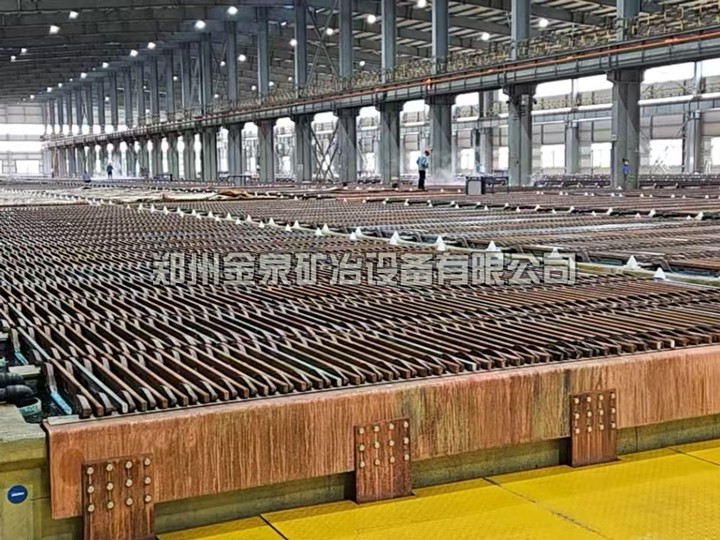 Leaching Method for Copper Sulfide Ore
the technical field of hydrometallurgy.
The method comprises: adding 8~167 mg/L of silver sulfate, 1~12 g/L of pyrite and 1.8~36.4 g/L of sodium persulfate as a compound enhanced leaching agent for copper sulfide ore to the leaching system, so as to improve the hydrometallurgical leaching efficiency of copper sulfide ore and reduce the leaching temperature.
When the temperature is 20℃, under the combined action of the enhanced leaching agent, the leaching rate of copper sulfide ore is 8.4~12.4% higher than that of the control group without any enhanced agent added at 50℃, with the temperature reduced by 30℃.
This method enables energy-saving enhanced leaching of copper sulfide ore, improves copper leaching rate, reduces energy consumption and cuts production costs.
-
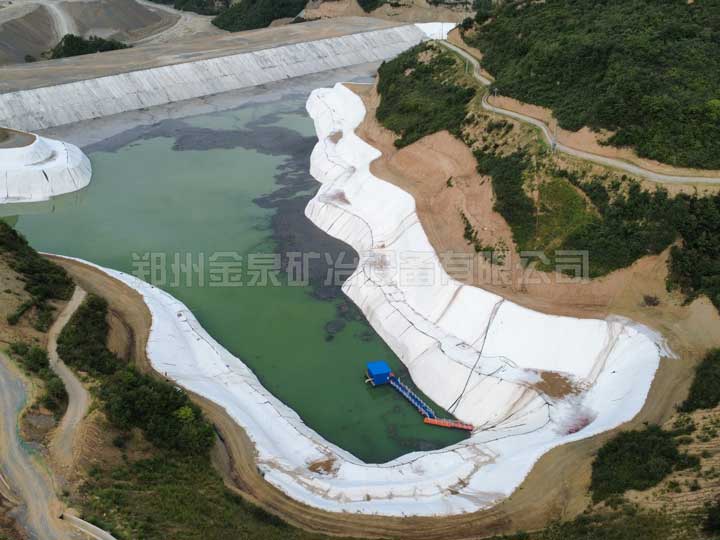 Heap Leaching Process for Low-grade Mixed Copper Ore
Stage-by-stage Heap Leaching Process for Low-grade Mixed Copper Ore
This process is designed to treat low-grade mixed copper ores containing oxidized copper ores and sulfide copper ores, and consists of the following steps:
Raw ore crushing: The raw ore undergoes three-stage one-closed-circuit crushing;
Sulfuric acid curing;
First-stage heap leaching: Heap leaching in a reusable yard;
Second-stage heap leaching: Heap leaching in a permanent yard;
Copper metal recovery: Extraction, stripping, and electrowinning processes.
-
Copper Recovery from Low-Grade Copper Oxide Ore
Process Method for Copper Recovery from Low-Grade Copper Oxide Ore
This method enables the efficient utilization of low-grade copper oxide ore resources, and is particularly suitable for treating alkaline copper-bearing oxide ores. Its process characteristics are as follows: After fine grinding, the ore is made into pulp and subjected to leaching with added reagents. The leached pulp then undergoes four-stage thickening counter-current washing. The raffinate produced from the pregnant solution through the solvent extraction-electrowinning (SX-EW) process is recycled back to the ore grinding, pulp preparation and leaching section.
The reagents used in this process are recyclable with no net reagent consumption. Featuring a simple process flow, low production cost, this method generates favorable economic and social benefits.
-
 Extracting Palladium from Spent Palladium Catalysts
Extracting Palladium from Spent Palladium Catalysts
The primary goal of recycling spent palladium catalysts is to extract palladium. Different purification methods are tailored to various types of palladium catalysts, and here we introduce the roasting and leaching purification method.
1、High-Temperature Roasting
Roast the spent palladium catalyst at high temperature. The main purpose is to remove excess impurities in the catalyst, typically organic substances and volatile gases, followed by enrichment of the spent palladium catalyst.2、Aqua Regia Leaching
Soak supported spent palladium catalysts in aqua regia. Aqua regia, composed of hydrochloric acid and nitric acid, boasts strong dissolving capacity. It not only enhances the palladium purification rate but also dissolves other redundant base metals. After leaching, test whether the pH value meets the required standard.3、Reduction and Separation
Filter out residual solids, collect the leachate, and pour it back into a beaker. Add a reducing agent dropwise to initiate a reduction reaction in the solution. Separate the liquid from the resulting sponge palladium, then filter and wash the sponge palladium thoroughly.4、Melting and Quality Testing
Retrieve the sponge palladium and dry it. Transfer the dried sponge palladium into a melting crucible for smelting. After completion of melting, weigh the product, calculate the purification rate, and use spectroscopic analysis to detect the purity of the extracted palladium. -
 palladium-carbon catalyst
At present, the recovery and refining technologies for palladium-carbon catalysts mainly include chemical methods, physical methods and biological methods.
Among them, chemical methods cover acid-base leaching, redox process, complex extraction, etc. These methods boast merits like high recovery efficiency and straightforward operation, yet they are plagued by the challenge of difficult chemical waste disposal.
Physical methods involve pyrolysis, high-temperature oxidation and the like. They feature simple operation and low cost, but their recovery rates are relatively lower.
Among all these approaches, complex extraction stands out as a relatively promising technology. This method works by forming a composite through integrating palladium-carbon catalysts with other compounds, followed by separating palladium from the composite via chemical or physical means.
This technique not only boosts the recovery rate but also reduces environmental pollution and the volume of waste generated.
-
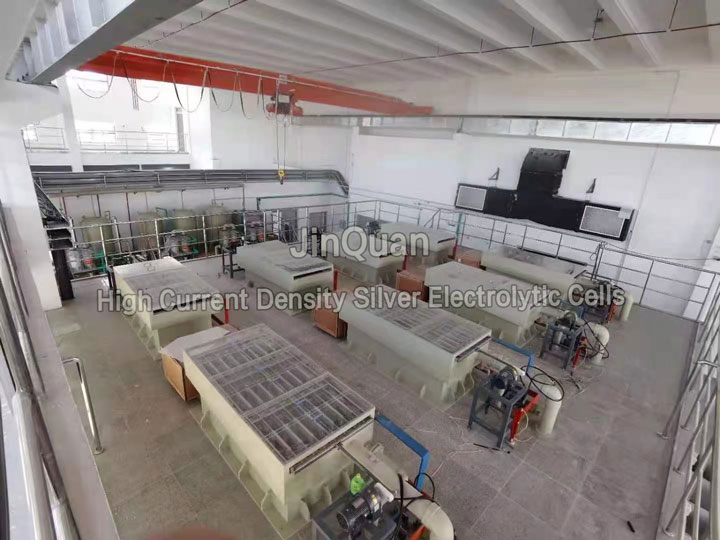 silver-containing catalysts
For the silver-containing catalysts used in the petrochemical and pharmaceutical industries, and the silver paste recovered from the solar energy industry, since they contain basically no other metal impurities besides silver, we have designed a new recovery process.
After such silver-containing waste catalysts and silver paste are leached with nitric acid, the pH value and silver ion concentration of the leachate are adjusted, and then it is directly transferred to a silver electrowinning cell for electrowinning treatment. The barren solution obtained after electrowinning is used as make-up water for diluting the leachate in the next batch, and the electrowon silver powder can meet the requirements of National Standard Grade 1 Silver.
The silver electrowinning process for recycling silver-containing waste catalysts boasts advantages such as simple operation and low production cost.
-
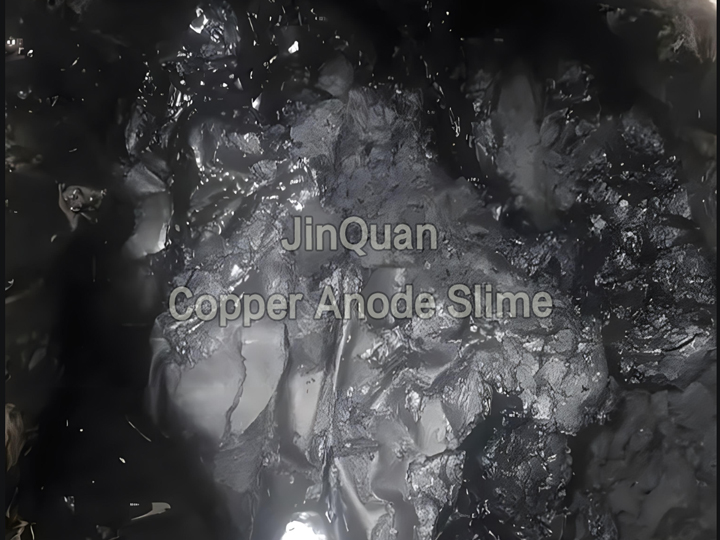 Copper Anode Slime
Sulfating Roasting-Selenium Distillation-Hydrometallurgical Treatment Process
Its main features are as follows:
(1) The copper-removed residue is processed via the "ammonia leaching - hydrazine hydrate reduction" route to produce silver powder;
(2) The silver-removed residue is treated using the "sodium cyanide leaching for gold - sulfur dioxide reduction" process to obtain gold powder;
(3) Lead is separated with nitric acid. This process addresses the issue of severe lead pollution.
Low-Temperature Oxidizing Roasting-Hydrometallurgical Treatment Process
Its main features are:
(1) Cu, Se and Te are separated with dilute sulfuric acid;
(2) Sodium sulfite (Na₂SO₃) leaching is adopted to replace ammonia leaching for silver extraction, optimizing the operating environment;
(3) Short production cycle and fast capital turnover;
(4) Elimination of lead hazards;
(5) High direct recovery rates of gold and silver, reaching 98.5% and 96% respectively.
Total Hydrometallurgical Treatment Process
This process uses dilute acid oxidative leaching to extract Se and Te. To prevent the dissolution of Au, Pt and Pd, the potential of the leaching process must be controlled. Finally, high-potential leaching is applied to extract Au, Pt and Pd. The chlorinated residue is leached with ammonia or sodium sulfite (Na₂SO₃) and then reduced to obtain crude silver powder. The crude gold and silver powders can be further purified by electrolysis.
-
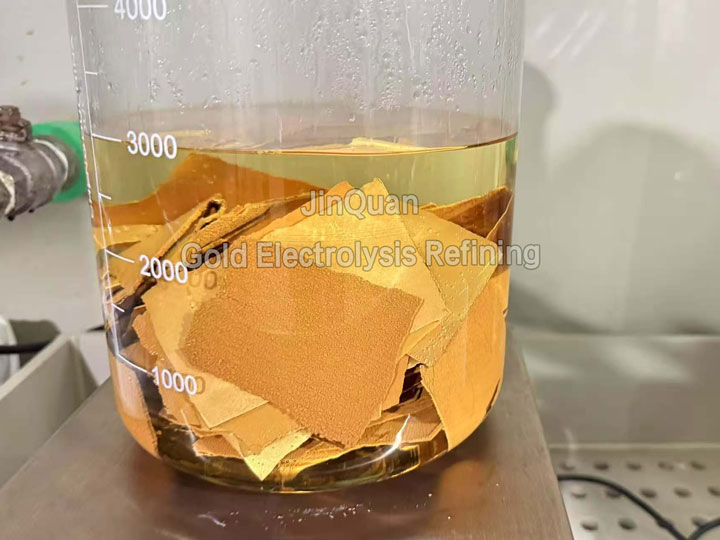 Gold Purification Processes
Comparison and Analysis of Gold Purification Processes
Comparison of Advantages and Disadvantages
1. Automation Level
All-wet Process: High automation level, with PLC control, equipment fault alarm function, and operation record parameters remotely transmitted to the central control room.
Pyrometallurgy + Hydrometallurgy Process: Low automation level. Some procedures such as smelting slag formation and slag skimming involve poor operating environments.
2. Environmental Protection Investment
All-wet Process: Generates small amounts of waste gas, wastewater, and waste liquid.
Pyrometallurgy + Hydrometallurgy Process: Generates large amounts of waste gas, wastewater, and waste liquid, resulting in high environmental protection investment.
3. Product Purity
All-wet Process: Can produce products with relatively high purity (the purity of gold can reach 99%-99.99%).
Pyrometallurgy + Hydrometallurgy Process: Low product purity (the purity can only reach around 84-90% after preliminary purification).
4. Energy Consumption
All-wet Process: Low energy consumption.
Pyrometallurgy + Hydrometallurgy Process: High energy consumption.
-
 silver extraction technology
Silver is a sulfur-loving element, and sulfur-containing extractants can be used for its extraction and purification.
Effective extractants for silver include diisooctyl sulfide, dialkyl sulfide, petroleum sulfide, etc. Diisooctyl sulfide has good antioxidant properties and can extract silver from nitric acid medium.
Currently, silver extraction technology is still in the experimental research stage. A factory in China has applied diisooctyl sulfide for silver extraction in small-scale production. In its precious metal refining process, 5-stage extraction is carried out using a centrifugal extractor, with an O/A phase ratio of (1~2):1 and an organic phase extraction capacity of approximately 70 g/L. The silver extraction rate exceeds 99.9%.
Pure silver powder is obtained by reducing the purified stripping solution with hydrazine hydrate at a reduction temperature of 50~60℃. The pure silver powder is then filtered, washed, dried, and cast to produce silver ingots.
For silver extraction using diisooctyl sulfide, the direct recovery rate is over 99%, the total silver recovery rate is more than 99.9%, and the produced silver ingots have a silver content of over 99.9%. Under certain conditions, extraction purification of silver is more economical and reasonable than electrolytic purification.