-
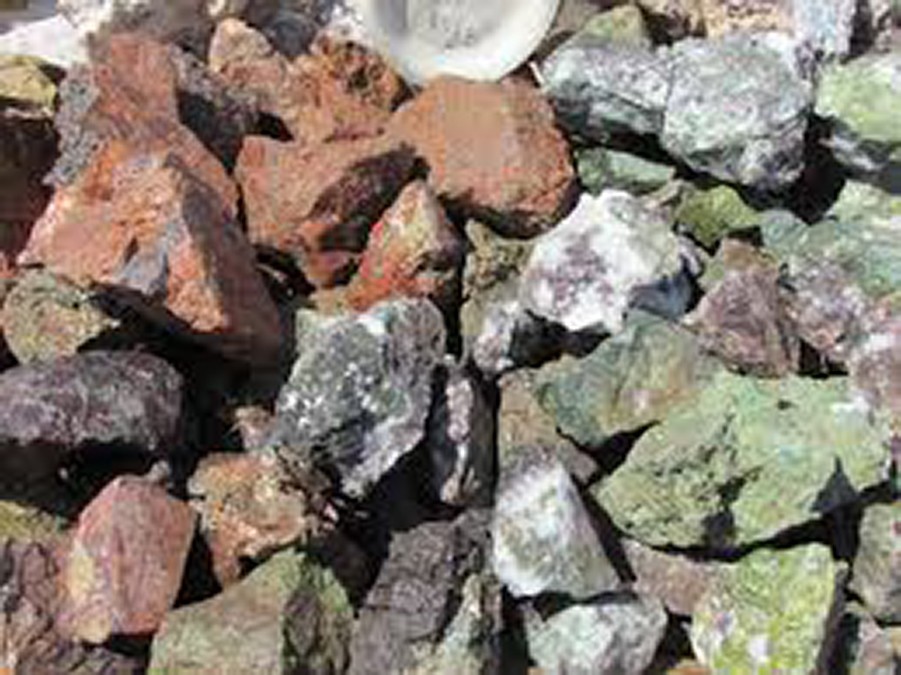 Low-Grade Complex Chalcopyrite
A Method for Selective Separation of Copper, Zinc and Iron from Low-Grade Complex Chalcopyrite
Relating to the technical field of metallurgical engineering
low-grade polymetallic complex chalcopyrite is finely ground and dried, then mixed with industrial-grade sodium lignosulfonate and ammonium chloride. After uniform mixing and slurry preparation with water, the mixture is heated to 160-180℃ in an autoclave. Industrial oxygen with a purity of 90% is introduced, and a hydrothermal reaction is carried out for 1.0-3.0 hours while maintaining an oxygen partial pressure of 1.0-1.4 MPa. After the reaction is completed, the mixture is cooled to below 80℃. After pressure relief, solid-liquid separation and washing are performed to obtain a solution rich in copper and zinc, and the filter cake is a conversion slag mainly composed of elemental sulfur, lead sulfate and Fe₂O₃.
During the leaching process, a composite catalytic additive composed of a surfactant and a catalyst in a certain ratio is added. Using water as the leaching agent under the pressurized oxygen hydrothermal condition, copper and zinc in the low-grade complex chalcopyrite are leached out, while impurity elements such as lead and iron are directionally converted and retained in the leaching residue.
-
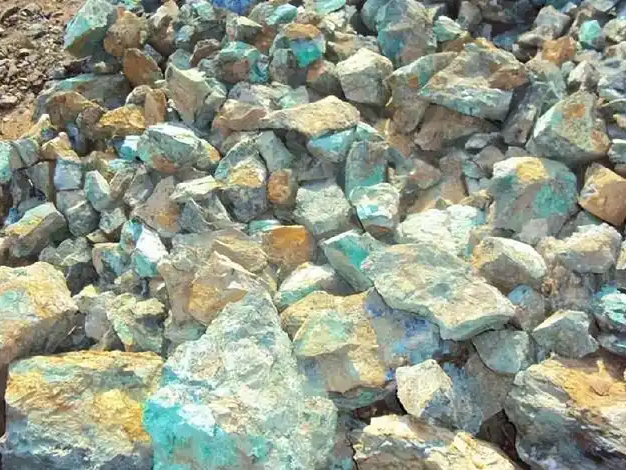 Leaching Process of Chalcopyrite
The leaching process of chalcopyrite involves oxidative leaching of chalcopyrite under low temperature and atmospheric pressure, using silver salt as the catalyst and ammonium persulfate as the oxidant. By controlling the temperature at 70-95℃ and carrying out leaching for 5-10 hours, a copper sulfate solution can be obtained, with a leaching rate of over 96% and a copper recovery rate of over 97%.
Since high temperature and high pressure are not required, the requirements for equipment corrosion resistance and pressure during leaching are low, and no harm is caused to the environment. The silver salt used in the process incurs no loss, while ammonium persulfate can be recycled after regeneration, thus reducing production costs.
This is a chalcopyrite leaching method characterized by simple process flow, short production cycle, low production cost and high production efficiency.
-
 Copper displacement recovery of gold
copper wire (or copper chips) by heating displacement recovery of gold. Gold containing chlorinated waste liquid is generally recovered by heating and replacing with copper wire (or copper chips).
In addition, electrolysis can also be used to recover gold from waste plating solutions with high gold content, while activated carbon adsorption and ion exchange adsorption can be used to recover gold from waste liquids and washing water with low gold content.
-
Beneficiation and Metallurgy Method for Mixed Copper Ore
Combined Beneficiation and Metallurgy Method for Mixed Copper Ore:
This method involves processing oxidized-sulfide mixed copper ores with an oxidation rate ranging from 10% to 80% via flotation to separate sulfide ores and obtain copper concentrate. The flotation tailings are then directly subjected to acid agitation leaching, followed by solvent extraction and electrowinning to produce cathode copper, thereby forming an integrated beneficiation and metallurgy process combining flotation and acid leaching.
It can significantly boost the copper recovery rate of oxidized-sulfide mixed copper ores, generally increasing the recovery rate by 10 to 40 percentage points. The process boasts such advantages as being concise and highly efficient, requiring low dosages of flotation reagents, having low fresh water consumption, cutting down on investment and production costs for the solid-liquid separation process of flotation tailings, preventing oxidized copper minerals from entering copper concentrate, featuring a rational flow, and achieving high recovery rates.
-
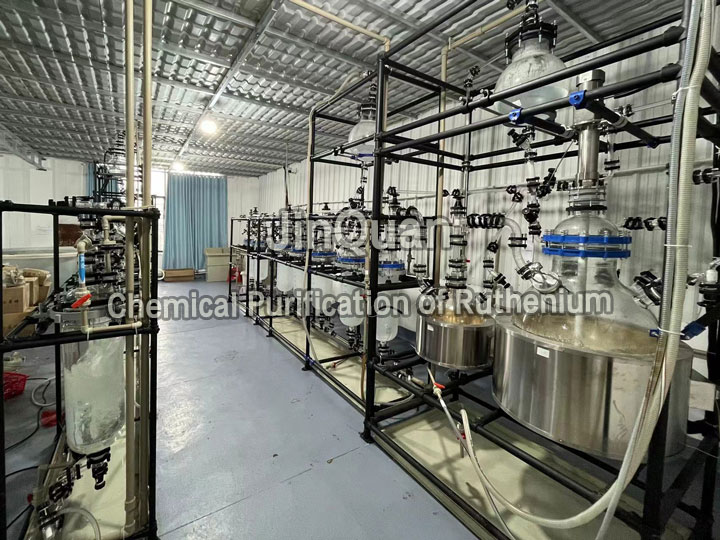 Chemical Purification of Ruthenium
Raw materials for ruthenium purification are mainly crude ruthenium and ruthenium-containing salt solutions obtained by distillation separation. Crude ruthenium is usually converted into solution using the alkali fusion-water leaching method. The primary goal of ruthenium purification is to remove osmium, an impurity with similar properties.
Transfer the ruthenium solution into a clean glass or glass-lined distillation kettle, and connect the exhaust pipe to an osmium absorption bottle filled with a 20% NaOH-3% ethanol solution as the osmium absorbent. Heat to boil for 40-50 minutes; osmium volatilizes as OsO₄ (osmium tetroxide) and is absorbed until a thiourea cotton ball test shows no red color. Then add a certain amount of hydrogen peroxide to continue oxidizing and volatilizing residual osmium.
Concentrate the osmium-removed ruthenium solution by heating to a ruthenium content of approximately 30 g/L. Add solid ammonium chloride while the solution is hot to form a dark red precipitate of ammonium hexachlororuthenate ((NH₄)₂RuCl₆). After cooling and filtration, wash the filter cake with anhydrous ethanol until the filtrate becomes colorless. The washed cake is dried, calcined, and reduced with hydrogen to produce sponge ruthenium with a ruthenium content of 98%-99%.
-
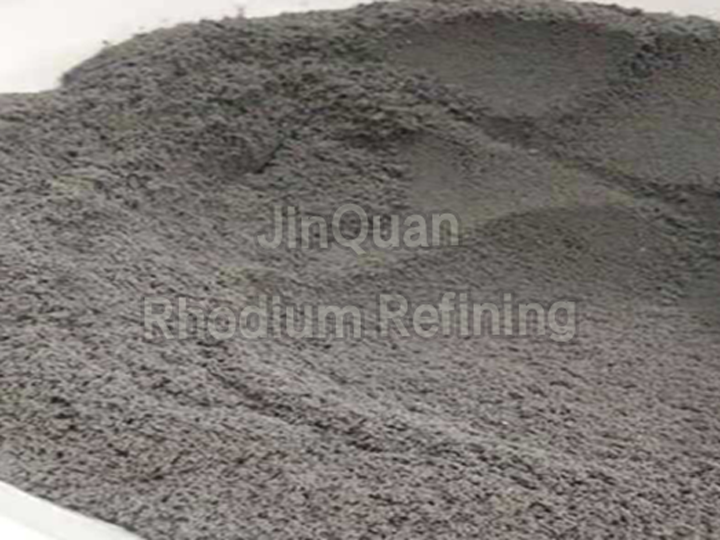 Basic Principles of Rhodium Refining
Basic Principles of Rhodium Refining:Rhodium refining is entirely conducted in solution. Crude rhodium metal must first be dissolved, and the sodium bisulfate melting-dilute sulfuric acid leaching method is employed to prepare a relatively high-purity chlororhodic acid solution. Rhodium raw material is mixed and melted with sodium bisulfate; after the melt cools, it is leached with dilute sulfuric acid, and rhodium enters the solution as rhodium sulfate.
The rhodium sulfate solution is neutralized and hydrolyzed with alkali solution to form rhodium hydroxide precipitate, which is then boiled and dissolved in hydrochloric acid to obtain chlororhodic acid solution. Chlororhodic acid solution reacts with sodium nitrite at high temperature to form rhodium nitro complex. Ammonium chloride is added to the filtered solution to precipitate ammonium sodium hexanitrorhodate; the precipitate is dissolved and boiled in hydrochloric acid, then hydrolyzed and reduced with formic acid to obtain rhodium black, and finally high-purity rhodium powder is obtained via hydrogen reduction at high temperature.
-
 Recovery of Platinum and Palladium
Recovery of Platinum and Palladium from Spent Catalysts:
1、Precious Metal Dissolution Method: Using high-temperature roasting, leaching with hydrochloric acid and oxidant, zinc powder displacement, dissolution with hydrochloric acid and oxidant, precipitation of platinum with solid ammonium chloride, and calcination to obtain pure platinum. The product platinum purity is 99.9% and the recovery rate is 97.8%.
2、Total Melting Leaching Method: Ion exchange adsorption of platinum (or palladium). The recovery rate of platinum is >98%, the recovery rate of palladium is >97%, and the product purity is all >99.95%. It has been applied in several factories.
3、Recovery of Palladium from Spent Palladium-Carbon Catalysts: The spent catalyst undergoes carbon burning, chlorination leaching, ammonia complexation, acidification purification, and finally reduction with hydrazine hydrate to obtain sponge palladium with purity >99.95%. A small amount of palladium in waste liquids such as complexation slag is recovered by resin adsorption. The recovery rate of palladium is >98%.
-
 recovery and refining of spent palladium-carbon catalysts
In the recovery and refining of spent palladium-carbon catalysts, the main purification methods are incineration and leaching.
Among them, the incineration method involves enriching the palladium-containing catalyst through high-temperature treatment, followed by recovery using traditional methods. The other is the leaching purification process, which utilizes ion exchange, electrolysis or displacement techniques to treat spent palladium-carbon. This method is generally suitable for spent palladium-carbon containing various other base metal impurities.
Here, we will share a refining process that combines incineration and leaching methods. First, the spent palladium-carbon catalyst to be refined undergoes evaporation and drying treatment, as used spent palladium-carbon contains a large amount of moisture. After drying, it is calcined at a high temperature of 600°C to remove the activated carbon components and organic matter from the spent palladium-carbon. Once calcination is complete, it is cooled to room temperature to obtain palladium oxide powder.
-
 Palladium Catalyst Refining Methods
Palladium catalysts are widely used in chemical synthesis and industrial production. However, palladium is a precious metal, so recycling used palladium catalysts is becoming increasingly important.
Dissolution method and pyrometallurgical smelting are two commonly used methods. The dissolution method, often referred to as hydrometallurgy, is generally divided into three types: carrier dissolution method, selective dissolution method, and total dissolution method. Below is a brief introduction to these three methods:
1、Carrier Dissolution Method:Literally, this method completely dissolves the carrier using acid or alkali, then extracts precious metals from the residue left after dissolution. For example, most industrial carrier catalysts use alumina as the carrier. Direct pyrometallurgical purification is not feasible for this type of palladium catalyst—only by dissolving the carrier (utilizing its solubility with the corresponding acid) can palladium remain in the residue (since palladium is insoluble). The palladium is then extracted via dissolving and reducing the residue. This method has a high recovery rate but involves complex operations, and the carrier cannot be recycled.
2、Selective Dissolution Method:This method does not damage the carrier; instead, it uses special solvents to separate precious metals like platinum and palladium from the carrier, followed by reduction treatment of the dissolved liquid. Opposite to the above method, the carrier is retained and recyclable. However, its drawbacks are obvious: platinum and palladium are not fully dissolved, leading to a relatively low recovery rate.
3、Total Dissolution Method:As the name implies, this method completely dissolves the spent platinum-carbon catalyst (including the carrier). Ion exchange resin is then used to adsorb platinum. The obtained alkaline desorption solution is acidified to precipitate platinum, which is finally refined into pure platinum.