-
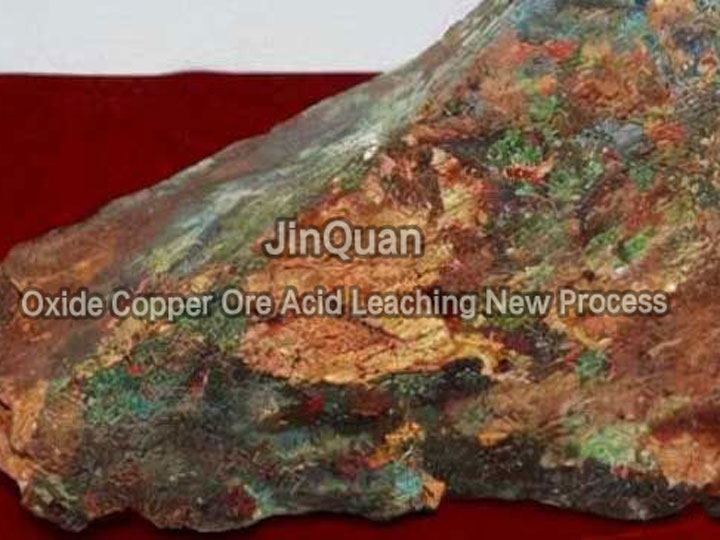 Flotation-Acid Leaching Technology
Flotation-Acid Leaching Technology for Treating High Carbonate Copper Oxide Ore:
The flotation-acid leaching technology for high carbonate copper oxide ore involves grinding the ore to a certain fineness, then conducting sulfidization flotation with a combined collector to remove acid-consuming carbonate gangue. The resulting rough concentrate is leached under specific conditions to obtain copper sulfate solution.
This technology can effectively eliminate acid-consuming carbonate gangue from raw ore, reducing acid consumption in hydrometallurgical leaching of high carbonate copper oxide ore by over 70% while ensuring an overall copper recovery rate of more than 85%. It lowers production costs and the investment scale of hydrometallurgical plants, features a flexible and easy-to-control process, and is suitable for large-scale industrial applications.
-
 Flotation Method Of Gold Ores
Flotation Method Of Gold Ores:
Flotation method is mainly used to treat vein gold ores with fine dissemination. Usually, the core equipment for gold ore flotation is the flotation machine. During the process, additional equipment such as ball mills, dryers, and spiral classifiers are also employed, which are responsible for sorting, grinding, drying, and classification.
The flotation machine is a key device in gold ore dressing plants. It features low investment and high separation precision. Its built-in automatic electronic control system can produce finer foam, effectively enhancing flotation efficiency while reducing power consumption. Moreover, it has minimal wear, easy maintenance, large processing capacity, and a complete range of models and specifications.
Cyanidation Method:Cyanidation method for gold ore extraction mainly involves crushing, grinding, and cyanide leaching of gold ore. After leaching, activated carbon is added to the pulp to adsorb gold. Finally, through refining and smelting, gold ingots are produced.
-
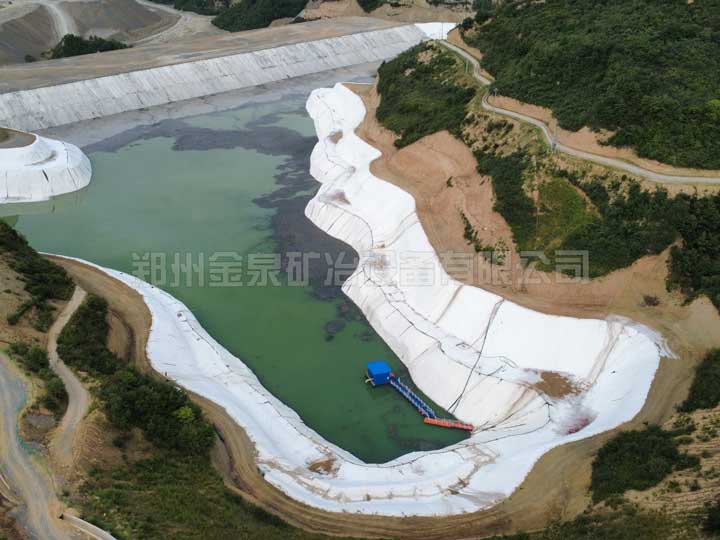 Copper from High-Grade Chalcocite
Method for Enhanced Extraction of Copper from High-Grade Chalcocite
The method for enhanced extraction of copper from high-grade chalcocite belongs to the field of hydrometallurgy of non-ferrous metals. The high-grade chalcocite ore is crushed and formed into heaps. After heap construction, circulating leaching operations are performed using bacteria-containing raffinate with high acid and high iron content. The leachate is periodically sampled to analyze copper concentration; when the copper concentration in the leachate exceeds 3.5 g/L, the leachate is extracted for solvent extraction, and the raffinate after extraction is returned for continuous leaching.
By combining biological heap leaching circulation with acid return from extraction, a leaching system with high acid and high iron content is established in the high-grade chalcocite heap leaching process. This enhances and accelerates the rapid leaching of chalcocite, thereby shortening the leaching cycle, enabling large-scale copper leaching, and improving the utilization rate of copper resources.
-
 Leaching refractory gold ores
Method for Synergistic Chlorination-Oxidation Leaching of Gold from Refractory Gold Ore:
This method for synergistic chlorination-oxidation leaching of gold from refractory gold ore belongs to the field of hydrometallurgy.
First, crush the gold ore into ore powder; fully mix the ore powder, sodium hydroxide, sodium hypochlorite and water to obtain ore slurry; introduce air into the slurry, and perform ultrasonic-enhanced leaching under stirring conditions.
During the enhanced leaching process, hydrogen peroxide is added periodically. The synergistic effect of hydrogen peroxide and sodium hydroxide is utilized to carry out redox reactions—their combined oxidation effect far exceeds that of either agent alone.
This not only shortens the reaction time but also improves gold leaching efficiency, saving reagent costs while boosting overall ore leaching performance. The leaching rate can reach over 98% using this method. Using sodium hypochlorite as the leaching agent does not impose environmental pressure; additionally, this invention adopts a one-step enhanced leaching process, simplifying the leaching workflow.
-
 The gold extraction process
The gold extraction process from copper-bearing oxidized gold ore falls under hydrometallurgical technology. First, the copper-bearing oxidized gold ore undergoes crushing, grinding and classification, followed by alkaline treatment. Then, a certain proportion of chelating agent and sodium cyanide are added to inhibit copper leaching and realize selective gold leaching. Finally, gold is extracted from the leachate via conventional activated carbon adsorption.
This method boasts a simple process, uncomplicated equipment and ease of implementation, along with high gold leaching rate, low reagent consumption, minimal capital investment and low cost. It is a gold extraction approach that is easy to industrialize and delivers good economic benefits.
-
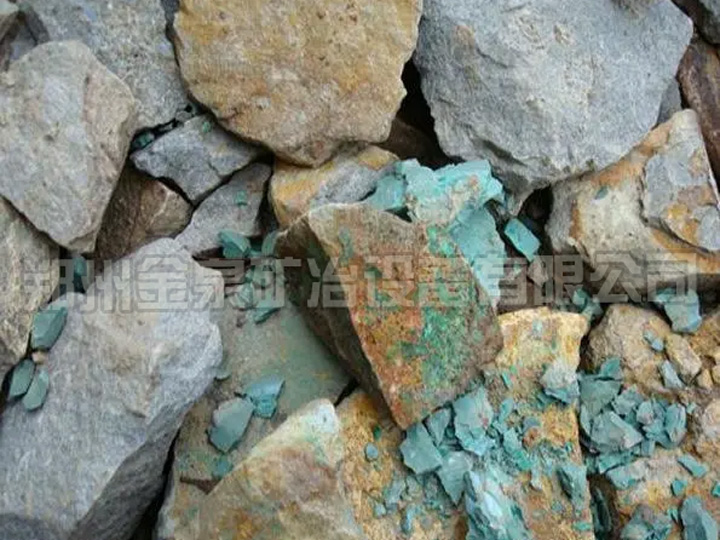 Extracting Copper From Chalcopyrite
Hydrometallurgy is another method for extracting copper from chalcopyrite. Due to its lower operating cost, it can be applied to the hydrometallurgical leaching of copper from low-grade copper ores. Common leaching agents are acidic chloride media and acidic sulfate media.
In sulfate media, the leaching kinetics are generally slow, and complete copper leaching is difficult to achieve. This is because a passivation layer forms on the mineral surface; additionally, a complex purification and impurity removal process is required.
In acidic chloride media, salts have high solubility in chloride-containing solutions, and copper ions can be stabilized in concentrated chloride systems. Thus, the leaching rate in chloride media is faster than in sulfate media. However, acidic chloride media have drawbacks: strong corrosivity, difficulty in electrowinning high-quality copper from them, and the need for complex purification and impurity removal processes after leaching.
-
Leaching and Electrowinning Copper from Oxide Copper Ores
Hydrometallurgical Process for Leaching and Electrowinning Copper from Oxide Copper Ores:
Process Description:
The process involves heap leaching copper oxides using sulfuric acid (H2SO4). After leaching, the resulting pregnant solution is neutralized with a base (e.g., NaOH) to precipitate copper as copper hydroxide (Cu(OH)2), which is then filtered and dissolved in sulfuric acid again to form a copper sulfate solution.
The copper sulfate solution undergoes leaching-electrowinning operations, including solvent extraction and electrorefining, to produce cathode copper.
Advantages of the Process:
In-situ Leaching: This method allows for the treatment of disseminated oxide copper ores that are difficult to process otherwise.
Concentrated Leaching-Electrowinning: By centralizing leaching and electrowinning operations, the process reduces transportation costs as it transitions from ore transport to tailings transportation.
Cost-Effectiveness: The process minimizes capital investment while achieving high efficiency in copper recovery.
Economic and Environmental Benefits: Reduces the need for ore transportation, lowering environmental impact and operational costs.
-
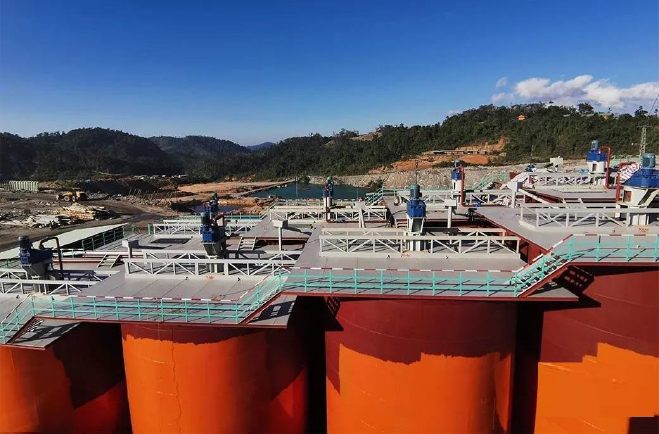 Leaching method of chalcopyrite
The leaching method of chalcopyrite belongs to the field of wet metallurgy technology, which includes the following steps:
1) Mixing chalcopyrite with alkali and smelting to obtain pre treated chalcopyrite;
2) Mix the pre treated chalcopyrite obtained in step 1) with acid solution, catalyst, and oxidant for oxidation leaching to obtain a copper containing leaching solution.
Firstly, alkali is used to melt chalcopyrite, causing changes in its lattice structure, making copper leaching easier, and reducing the leaching temperature for subsequent leaching; Adding catalysts and oxidants during the acid leaching process further reduces the leaching temperature, shortens the leaching time, and improves the leaching rate of copper. The results of the implementation example show that the leaching method provided by the present invention has a leaching temperature of 75 ℃ and a leaching time of 2 hours, and the leaching rate of copper reaches over 99.9%.
-
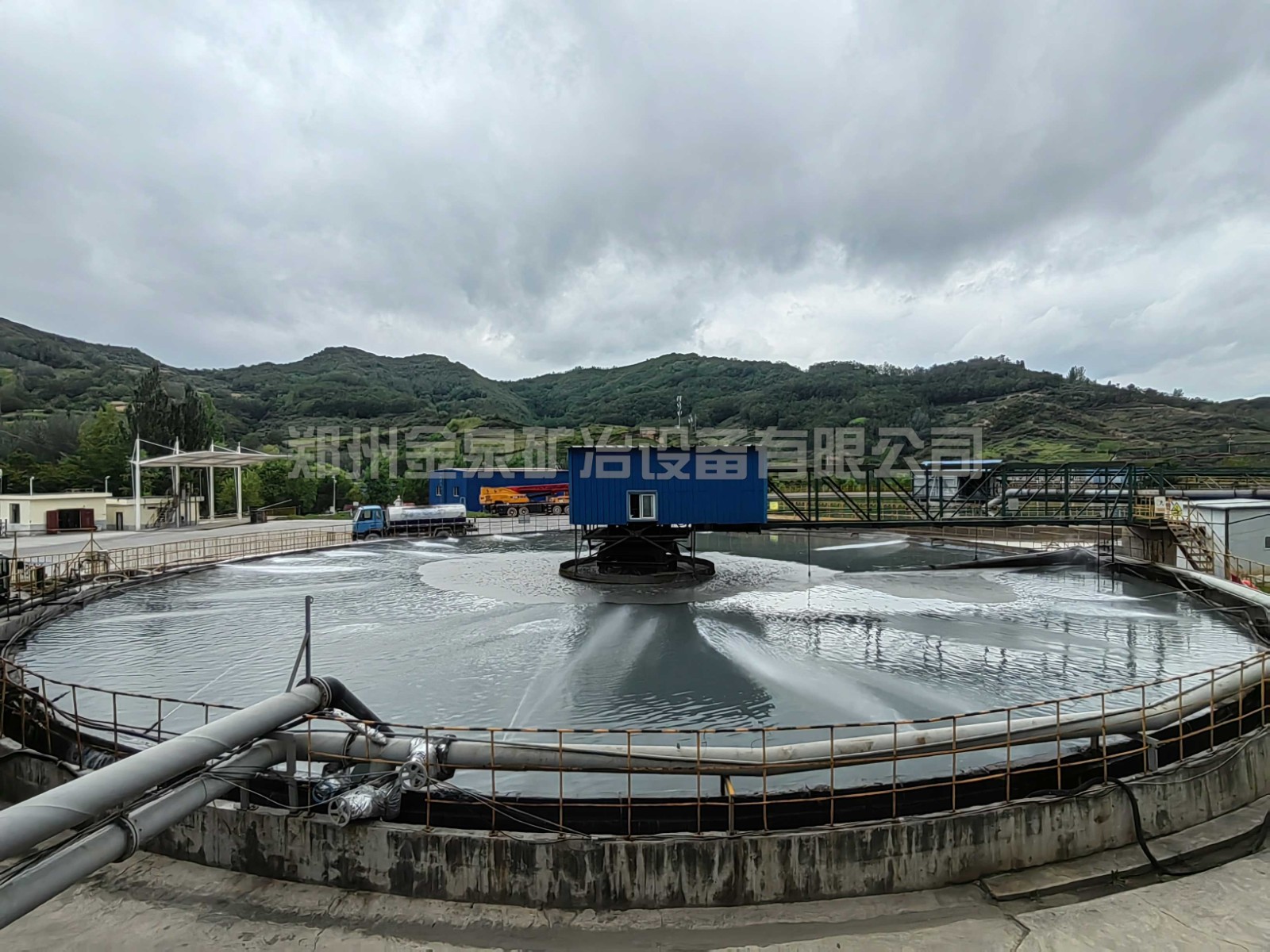 Sulfide Gold Ores After Cyanidation
Hydrometallurgical Process for Concentrating Copper, Gold, and Silver from the Tailings of Sulfide Gold Ores After Cyanidation
Process Description:
The process utilizes calcium sulfide (CaS) and calcium arsenic oxide (Ca3AsO4), which are filtered or washed using a mist tower to remove dust before being discharged into the atmosphere.
After cyanidation, the tailings from sulfide gold ores are fed into a thickening slurry tank. Water is added to adjust the slurry concentration to 40-60%. Under ambient temperature and pressure, the mixture is continuously stirred to ensure uniformity.
Industrial sulfuric acid (H2SO4) is then added to adjust the pH of the slurry to 5. The slurry is stirred for 15-25 minutes to stabilize the pH before being transferred back to the thickening tank.
The slurry's concentration is adjusted to 20-30% with water and maintained at a pH of 6. This step involves continuous feeding and discharge of material.
While stirring, flotation reagents and an emulsifier (2# oil) are added uniformly to the slurry.
The slurry is then transferred to a flotation tank for closed-circuit operations, including primary roughing, secondary scavenging, and tertiary cleaning. Copper, gold, and silver are concentrated through this process.
The process is simple, efficient, cost-effective, with high metal recovery rates.
Requires low investment and demonstrates quick results.