

 +8613303827570
Features of Carbon-separating screen
This product is installed in the carbon-immersing tank, with the function of separating the ore pulp from the activity
Notes for Selection
Please specify the model and quantity, as well as the model and material of screen cloth while placing your order. If there is no special requirement, we will make the screen in accordance with the manufacturer's drawings.
We can design and make the screen as per the customer's special requirements.
Technical parameter list of carbon-separating screen
型号 | 筛子直径(mm) | 筛架长度(mm) | 筛孔规格(目) | 重量(kg) |
JQ300 | ⌀300 | 1000 | 28 | 20 |
JQ500 | ⌀500 | 1000 | 20 | 35 |
-
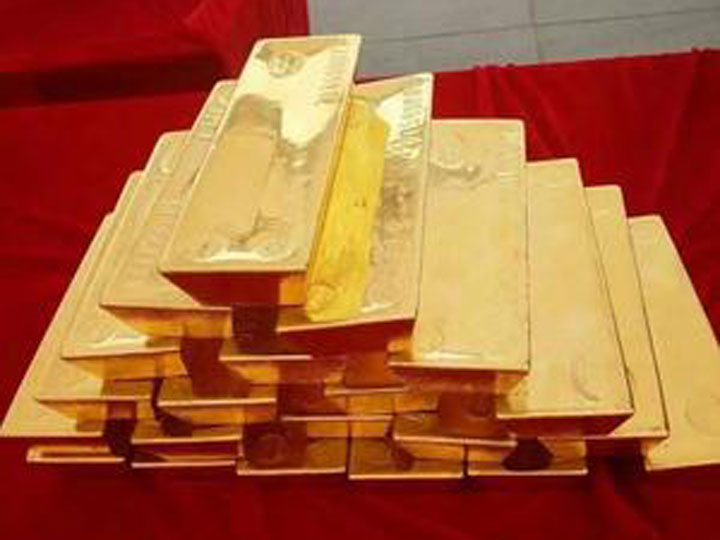 What are the chemical refining methods for goldWhat are the chemical refining methods for gold
Answer: The chemical refining of gold mainly adopts processes including concentrated sulfuric acid boiling leaching, nitric acid silver parting, aqua regia gold parting, chlorination gold parting, and reduction with oxalic acid or sodium sulfite.
1、The concentrated sulfuric acid boiling leaching method uses concentrated sulfuric acid for long-term leaching and boiling at high temperatures. It converts base metals such as silver and copper in the alloy into sulfates for removal, so as to achieve the purpose of gold purification.
2、The nitric acid silver parting method features a fast reaction rate and high saturation concentration of silver in the solution. It is generally carried out under autothermal conditions (no heating is required, or heating can be applied at the later stage to accelerate dissolution), so it is widely used in industrial production.
3、The aqua regia gold parting method is suitable for refining crude gold with a silver content of less than 8%. During the process, gold dissolves into the solution, while silver forms silver chloride (AgCl) precipitate and is separated out. The platinum group metals (PGMs) contained in the solution are subsequently separated and recovered.
4、The feedstock for oxalic acid reduction refining is usually crude gold or crude gold powder obtained from the enrichment stage, and a gold grade of around 80% is sufficient. First, the crude gold powder is dissolved to transfer gold into the solution. After adjusting the acidity of the solution, oxalic acid is used as the reducing agent to reduce gold ions into pure sponge gold. Following acid pickling treatment, the sponge gold can be cast into gold ingots with a gold grade of over 99.9%.
-
 Precious Metal Mixed SolutionSeparating Rhodium (Rh) and Ruthenium (Ru) from Precious Metal Mixed Solution
The method for separating rhodium and ruthenium from a precious metal mixed solution includes the following steps:
Add deionized water to the precious metal mixed solution to adjust the rhodium concentration in the system, then add dilute hydrochloric acid to adjust the pH of the mixed solution to 2.1~2.3.
Slowly heat the precious metal mixed solution to 125℃~130℃, then slowly add triethylenetetramine (TETA) solution under continuous stirring. Rhodium ions in the mixed solution react with triethylenetetramine to form rhodium salt precipitates. After cooling, filter the mixture to obtain filter residue and filtrate, with the filtrate reserved for subsequent use. Wash the filter residue until the washing effluent is colorless, then place the filter residue in a quartz boat and feed it into a muffle furnace.
This method can effectively solve the drawbacks of existing rhodium and ruthenium recovery processes: conventional recovery mostly adopts the melting method, which has complex procedures, can only recover target metals from solid waste, and cannot be applied to precious metal mixed solutions.
-
High-Efficiency Recovery of Platinum Group Precious MetalsHigh-Efficiency Recovery of Platinum Group Precious Metals
Method for High-Efficiency Recovery of Platinum Group Precious Metals from Platinum-Containing Organic Alcohol Waste Liquor
To solve the defects of existing methods such as complex process, low platinum recovery rate, high energy consumption, environmental unfriendliness, poor product purity and potential safety hazards:
The method comprises the following steps: filter the platinum-containing organic alcohol waste liquor, remove filter residues to obtain a clear filtrate, and adjust the pH of the filtrate to 1.0-2.0 with acid or alkali liquor;
Under continuous stirring, add excess weak reducing agent into the pretreated platinum-containing organic alcohol waste liquor for reaction. The weak reducing agent refers to a reducing reagent whose reduction potential under the acidic condition of pH=1.0-2.0 can reduce metals with metal activity equal to or lower than platinum, but is not sufficient to reduce metals with potential higher than H⁺ potential;
Filter the reacted solution to obtain filter residues and tail liquor. The filter residues are washed and roasted to obtain powdery platinum group precious metals. The recovery process has the advantages of simple operation, short flow, high recovery rate, high product purity and low cost, and is of great industrial application value.