-
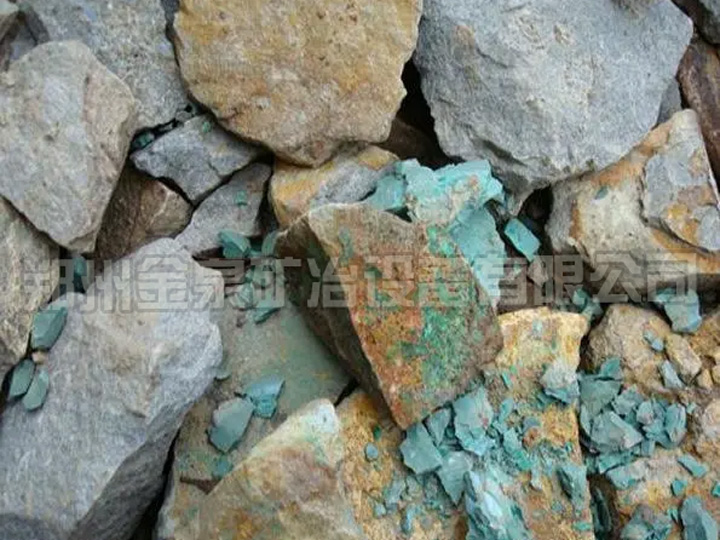 Extracting Copper from Mixed-Type Copper Ores
Method for Extracting Copper from Mixed-Type Copper Ores:
The method for extracting copper from mixed-type copper ore deposits involves utilizing sulfide copper ores and oxide copper ores as raw materials. The process involves breaking down these ores into suitable sizes. Oxidized copper ores are directly treated using bacterial leaching, while the oxides are first washed and screened before being separately processed into slimes and sand. These fractions undergo agitated leaching and bacterial leaching. The leach solutions are then subjected to solvent extraction, with a portion being recirculated back for continued bacterial leaching to maintain acid balance, and the remaining portion being used for further processing of slimes and sands. This wet metallurgical approach avoids traditional grinding and roasting steps, making it cost-effective and environmentally friendly.
The process yields high copper recovery rates of 80% from sulfide copper ores and 93% from oxide copper ores. It is characterized by low costs, minimal capital investment, and minimal environmental impact, offering a sustainable solution for regions with mixed-type copper ore resources. This method provides a new development opportunity for the metallurgical industry in such areas.
-
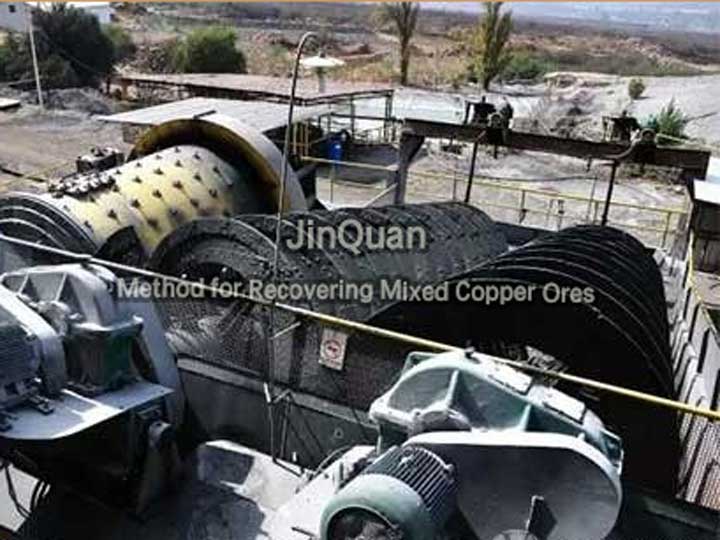 Method for Recovering Mixed Copper Ores
The method is characterized by the following steps:
Ore Grinding: The ore is ground to -0.075 mm, representing 60–80% of the original mineral content.
Chemical Addition: Add 500–1200 g/t of sodium thiosulfate (Na₂S), 100–1000 g/t of malachite, and 25–100 g/t of oleate (e.g., sodium dodecyl sulfate or similar).
Copper Concentrate Separation: The treated ore is separated into copper concentrate and flotation tailings.
Magnetic Separation: The flotation tailings are subjected to magnetic separation under a field strength of 0.35–1.30 Tesla, yielding magnetic concentrate and magnetic tailings. The magnetic concentrate is then dried to a liquid-to-solid ratio of 2–3:1.
Leaching: Add concentrated sulfuric acid (H₂SO₄) to achieve a pH of 1, agitate the mixture for 20–60 minutes, and perform solid-liquid separation to yield leach solution and precipitated residue.
Wet Metallurgical Processing: The leach solution is processed using wet metallurgical methods to produce cathode copper.
This method combines flotation and leaching processes and achieves a high copper recovery rate. It is simple, efficient, cost-effective, energy-saving, and environmentally friendly, making it an ideal approach for processing mixed copper ores.
-
 Hybrid Method for Precious Metal Recovery in Gold Mines
Hybrid Method for Precious Metal Recovery in Gold Mines:
The hybrid method combines flotation and cyanide extraction to recover precious metals from fine gold ores. The process involves the following steps:
Crushing: Use crushers to break down the ore into manageable sizes.
Grinding: Utilize ball mills to achieve a fine grind of the ore.
Drying: Dry the ground ore using dryers.
Flotation: Float the gold-bearing minerals using flotation machines.
Cyanide Leaching: Dissolve gold from the froth using cyanide solutions in a series of leach tanks.
Gold Recovery: Extract gold from the solution via electrowinning or zinc precipitation.
This hybrid approach minimizes capital investment while achieving high separation efficiency. It is characterized by low energy consumption and minimal maintenance requirements, ensuring smooth operation at large-scale mining sites.
-
 Producing Copper Sulfate from Oxidized Copper Ores
Method for Producing Copper Sulfate from Oxidized Copper Ores:
This method is used to produce copper sulfate from Oxidized Copper Ores, involves the following steps:
Ore Breakage:
The ore is crushed into particles of size 2-4 cm;
Stainless Steel Kettle Treatment;
Place the crushed ore into a stainless steel kettle;
Add water to cover the ore;
Add diluted sulfuric acid (40%-60% concentration) in the amount of 20-30 kg per ton of ore.
Heating: Heat the kettle at a temperature of not less than 100°C for at least 8 hours.
Solvent Recovery: Remove the residual solution from the stainless steel kettle and use it for copper sulfate production.
This method features high recovery rates, low costs, high profitability, simple operations, ease of operation, no pollution, and no gas emission.
-
 Flotation-Acid Leaching Method
Flotation-Acid Leaching Method for High-Carbonate Oxidized Copper Ores:
This flotation-acid leaching method for processing high-carbonate oxidized copper ores involves the following steps: after grinding the ore to a certain degree, a combination of collecting agents is used for sulfide flotation to remove carbonate acid-consuming layers, resulting in a coarse concentrate. Under specific conditions, this coarse concentrate is then subjected to leaching to produce a copper sulfate solution.
This method effectively removes the carbonate acid-consuming layers from the original ore, reducing acid consumption in wet leaching by over 70%, while ensuring a copper recovery rate of more than 85%. It reduces production costs and scales down investment requirements for wet metallurgical plants. The process is flexible and easy to control, making it suitable for large-scale industrial applications.
-
 Enhanced Leaching Method for Copper Ores
Enhanced Leaching Method for Copper Ores:
This enhanced leaching method, belonging to the wetting metallurgy field, involves dividing the leach solutions of each unit cell in a heap into multiple groups, where the copper and acid concentrations in each group's leaching solution are different.
The method uses a high-copper, low-acid leaching solution for short-term heap leaching units, while using a low-copper, high-acid leaching solution for long-term heap leaching units. This simplified operational approach improves the copper leaching rate.
-
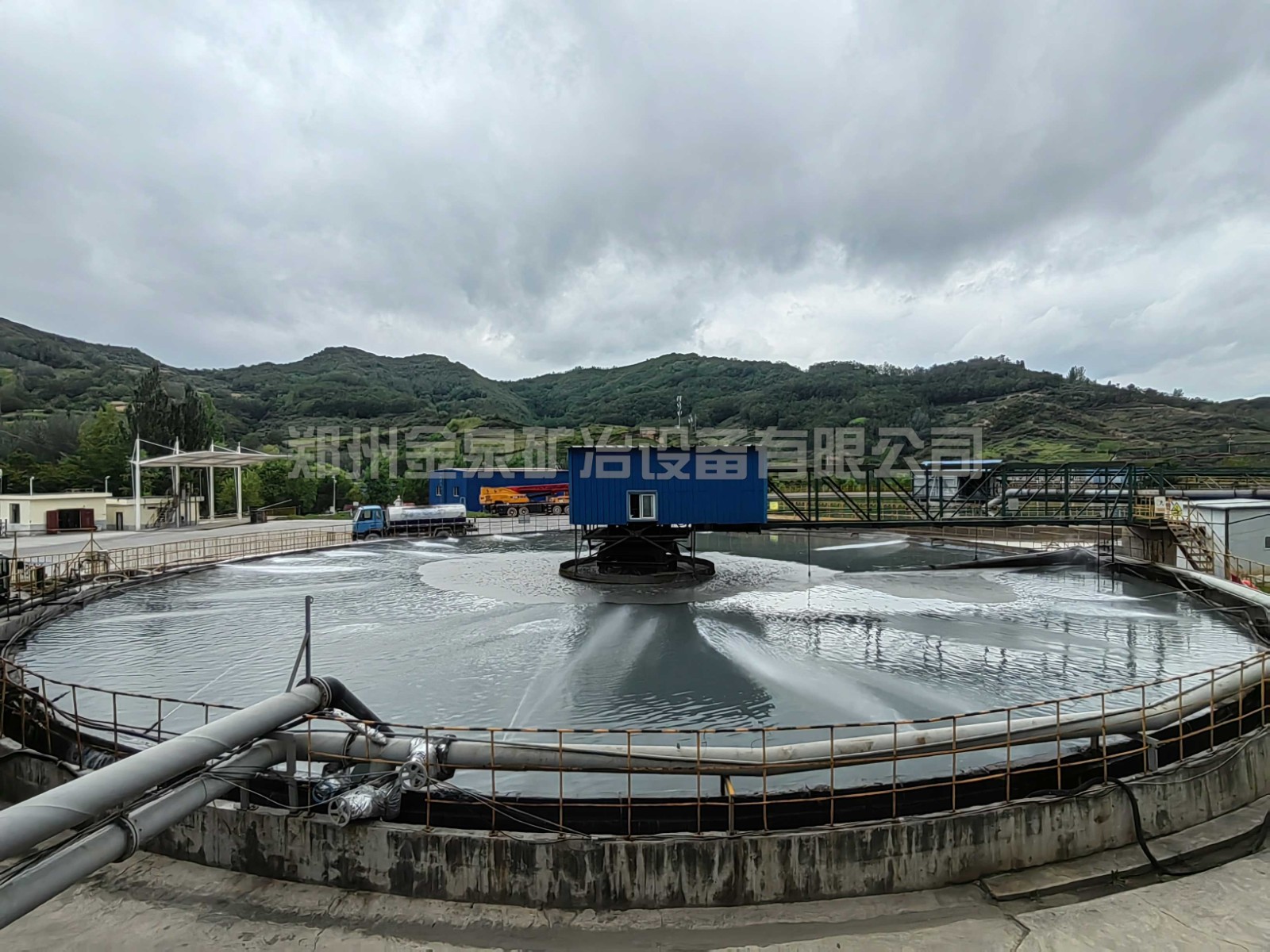 Process for High-Sulfur Chalcopyrite Ores
This low-cost, high-recovery process for the treatment of high-sulfur chalcopyrite ores includes the following stages:
1、Boiling Roasting;
2、Low-acid Leaching;
3、Flotation;
4、High-copper Leaching;
5、Copper Solvent Extraction;
6、Low-copper Solvent Extraction;
The process involves boiling roasting of high-sulfur chalcopyrite ores, followed by low-acid leaching and flotation without the need for additional reagents beyond a small amount of floatation agents. This method achieves over 85% sulfation rates for cobalt and copper, with extraction rates exceeding 98%, while the slag contains less than 0.15% cobalt and less than 0.30% copper. The roasting process is self-sustaining and requires no external energy input, resulting in low energy costs. Additionally, the steam generated during roasting can be utilized for heating in wet leaching, and the process avoids the addition of harmful elements like chlorine, thus minimizing the risk of corrosion to equipment and degradation of copper solvents.
-
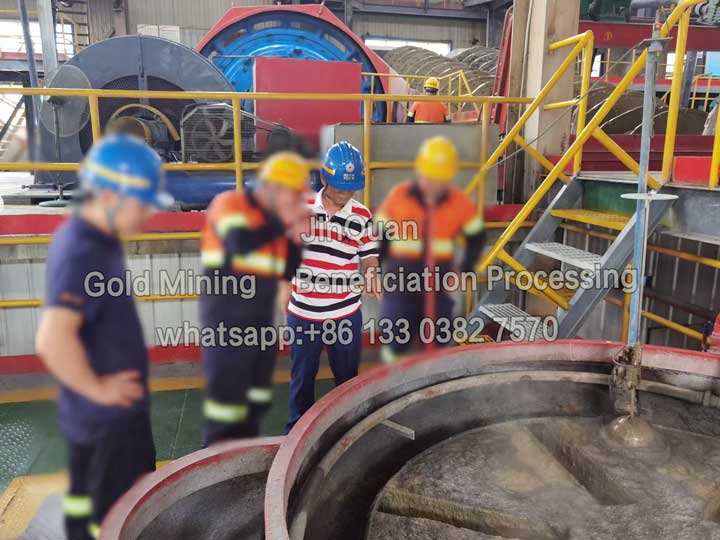 Improving Flotation Indices of Chalcopyrite Ores
Improving Flotation Indices of Chalcopyrite Ores for Gold Mining
This flotation method is designed to enhance the recovery and efficiency of gold mining by improving the flotation indices of chalcopyrite ores. The process is based on a specific flotation technique known as "Sulfide Leaching of Sulfur Salts - Sulfide Precipitation - Dihydrogen Water + Starch Coupled Inhibition - Copper Sulfide Selective Flotation Separation."
The method involves the following stages:
Coarse Flotation (Stage 1)
Scanning Flotation I (Stage 2)
Fine Flotation I (Stage 3)
Scanning Flotation II (Stage 4)
Fine Flotation II (Stage 5)
Fine Flotation III (Stage 6)
This flotation method enables the conversion of gold-bearing chalcopyrite ores into independent sulfide mineral forms, thereby preventing the loss of gold contained in chalcopyrite to tailings and optimizing the performance of combined inhibitors. It significantly improves the quality and recovery rates of precious metals such as gold and copper, ensuring sustainable, efficient, and environmentally friendly development of chalcopyrite ores with minimal alkalinity.
-
How copper is extracted from its ore
Solid-Liquid-Solid Wetting Furnace Process for Dissolution of Chalcopyrite or Concentrate:
The process operates under conditions of over-saturation with water and/or non-hydrated salts. It intentionally and repeatedly applies wetting and drying steps to enhance chemical and physical phenomena on or in the mineral or concentrate, thereby inducing copper crystallization, re-crystallization, and liberation during the non-redox decomposition of sulfides and their subsequent reaction with chlorides.
This method comprises three steps: (a) Wetting, (b) Drying and Over-saturation, and (c) Cleaning and Re-wetting. These steps are performed under temperatures in the range of 20-40°C without considering redox potentials, while minimizing water and acid consumption, with no need for oxygen addition.
The process minimizes water and acid usage because sulfide transformation can occur solely in the presence of hydrated salts or with a small amount of added acid and water. Additionally, it allows reduced water use during agglomeration and/or solidification steps because water molecules from the hydrated salt wet the mineral, minimizing the amount of water required to be added during wetting and agglomeration/solidification.
This method can also be applied to sulfides of less noble metals such as nickel, zinc, cobalt, lead, and molybdenum, regardless of whether arsenic is present in the sulfide mineral matrix.