-
 Dore Silver Refining Process
Sodium Chloride Precipitation Method:
Strictly speaking, this process is utilized for recovering silver from wasted electrolyte solutions rather than purification. It entails using sodium chloride to react with silver nitrate and precipitate silver chloride, thereby separating silver from other impurities. The precipitated silver is then reduced into silver powder using agents such as hydrazine, iron powder, and zinc powder. This silver powder is subsequently reacted with nitric acid to generate the corresponding silver electrolyte. Currently, many smelters employ this method.
-
 Chloroauric Acid Leaching Method for Gold Refining
Chloroauric Acid Leaching Method for Gold Refining:
Leaching Process: This involves extracting gold from a chloroauric acid solution into an organic solvent, allowing other non-gold impurities to remain in the aqueous phase.
Reverse Leaching with HCl: After leaching, hydrochloric acid is used to separate gold from the organic phase by moving it into the aqueous phase.
Reduction of Precious Liquid: The precious liquid containing gold is then reduced to elemental gold.
-
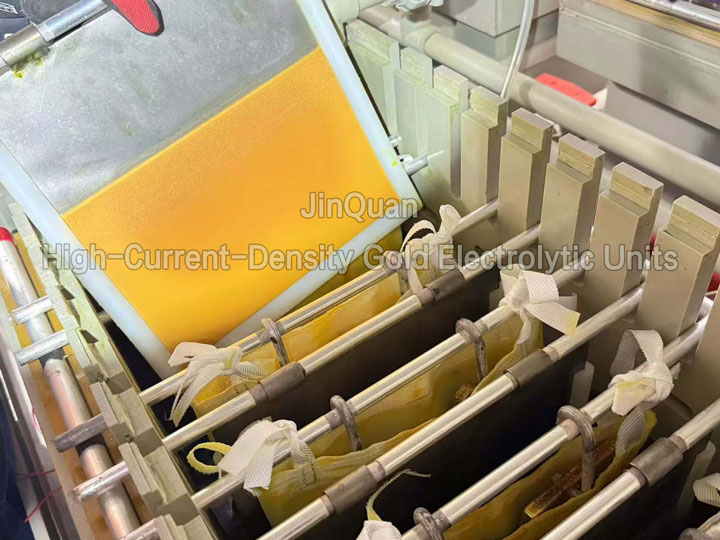 To Reduce Loss in Gold Refining Process
To Reduce Loss in Gold Refining Process:
During the dissolution process, precious metals are lost through smoke and improve the effectiveness of smoke mist separation.
Gas bubbles generated during dissolution break at the surface of the reaction tank into small droplets that are carried into the smoke absorption tower with the smoke and dispersed in the liquid or air inside the absorption tower. These droplets contain ClAu3+ and acid, leading to gold loss. Therefore, we need to control the amount of smoke generated from the reaction tank and install a gas-liquid separator to collect liquids for recycling or return them to the reaction tank.
For a company performing gold refining using a chemical method, several grams of gold can be directly recovered during the treatment of one batch of gold.
Gas-liquid separators should be installed on both the dissolution and reduction reaction tanks to recover gold and enhance acid efficiency while reducing the amount of reagents used for smoke treatment.
-
high-current-density gold electrolytic units
Characteristics of High-Current-Density Gold Electrolytic Units:
A. The high current density of this cell design allows for shorter operation cycles per unit weight of the anode, accelerating capital turnover.
B. The electrolyte circulates in parallel with a downward and upward flow pattern. The liquid flows parallel to the electrodes within the entire electrolytic cell, ensuring uniform ion diffusion.
C. A large volume of electrolyte circulates, enhancing ion diffusion speed and minimizing concentration polarization.
D. A screw connection is used between the cathode and mother liquid outlet, ensuring excellent electrical conductivity.
E. The electrolytic cells are arranged in parallel configuration.
-
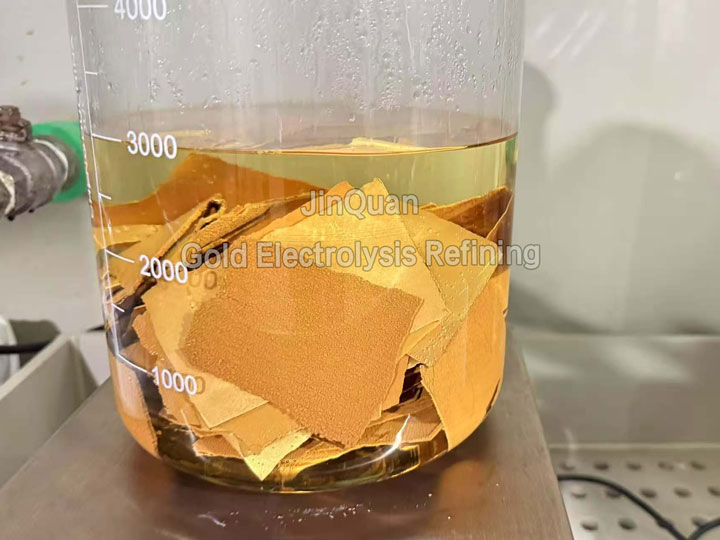 gold electrolysis refining
Gold Electrolysis Refining:
In China, the technology for refining gold using electrolysis has been practiced for some time. Typically, the current density at the cathode is 300 A/m², with the concentration of gold in the electrolyte reaching 300 g/L. Major companies employing this method include Sichuan Changcheng and Inner Mongolia Qianyun, as well as various non-ferrous metal refineries such as Shenyang Refinery/HSBC/Hubei-Yichuan Refinery. The cathode has a relatively long cycle time, leading to significant gold accumulation in the process.
Since around 2000, high-current-density gold electrolytic cells have been introduced into China. These cells feature a cathode current density of 1200 A/m² and an electrolyte gold concentration ranging between 100-150 g/L. This advancement has enhanced production efficiency, reduced gold accumulation in the process, and streamlined operations.
-
 how to refine silver to 999
The Oxidized Silver Method: This is a method for producing high-purity white silver that involves the purification of silver electrolyte solutions. It has the advantages of short reaction time, one-step removal of multiple impurity ions such as copper, lead, iron, gallium, and antimony, minimal precious metal loss, and no introduction of new impurities during the purification process. This method is superior to other purification technologies, such as hot decomposition methods or other cleaning techniques, in terms of cost reduction, process simplification, and elimination of hazardous gas emissions like nitrogen oxide.
It also improves silver's collection rate and recovery rate (can increase by 0.3-0.6%) while reducing workers' labor intensity and enhancing safety factors. This approach is characterized by its simplicity, short purification time, recyclable electrolyte, minimal precious metal loss, low production costs, and no environmental hazards. It represents a multifaceted solution that has been promoted for use in our company. Currently, Anshan Mountain Copper, Yong Xin Jiao Jin, and other enterprises are using this technology.
-
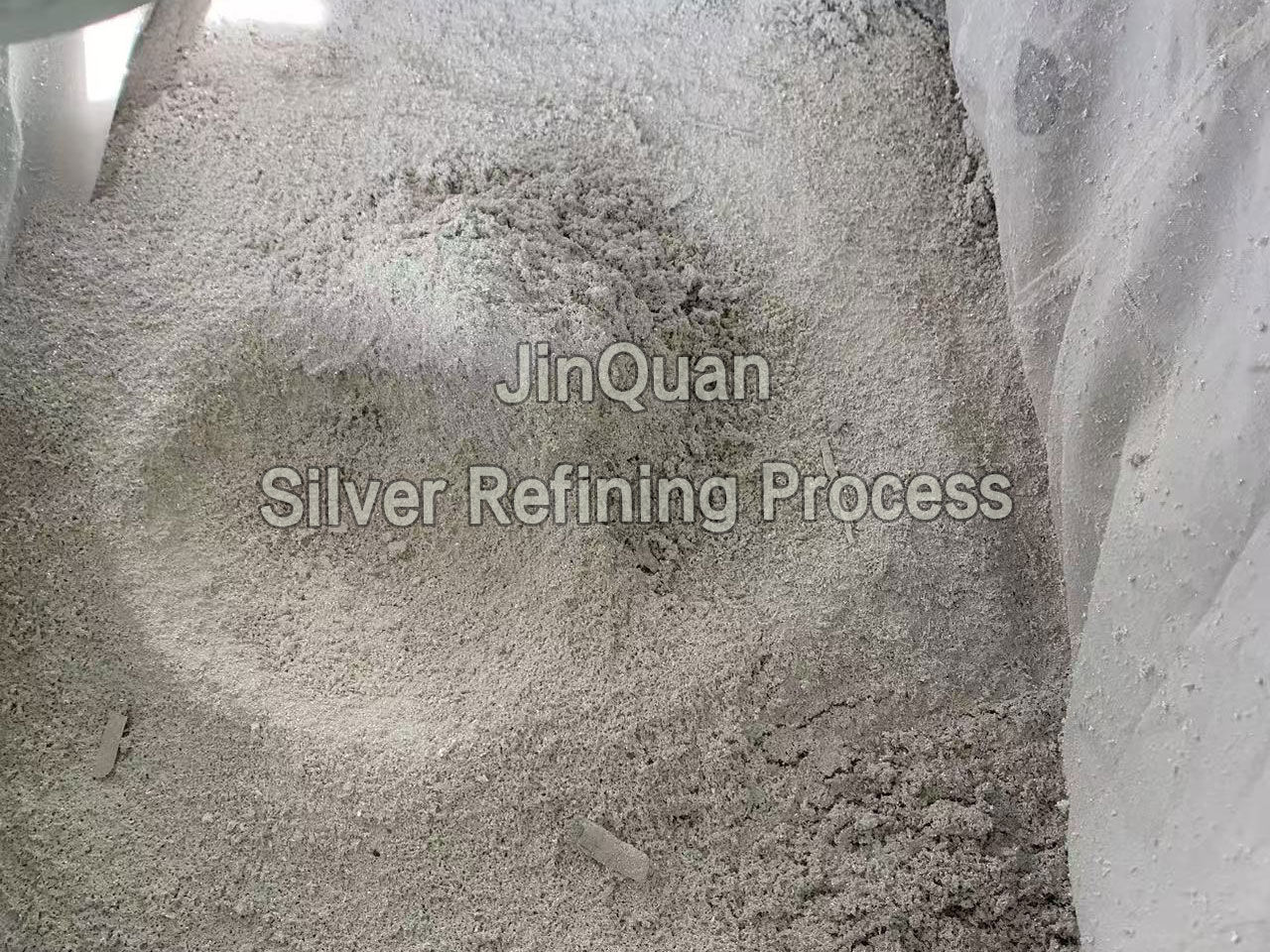 silver refining process
The refining process of silver:
This method, known as the sodium chloride precipitation method, is strictly speaking a technique used to recover silver from spent electrolytic solutions and does not constitute purification. The process involves using sodium chloride to react with silver nitrate and form sodium chloride precipitate, thereby separating silver from other impurities. Afterwards, the silver powder is reduced by reducing agents such as hydroxylamine, iron powder, and zinc powder into refined silver. Finally, the silver powder is reacted with nitric acid to generate nitrate solution for electrolysis. Many refining plants now adopt this method.
-
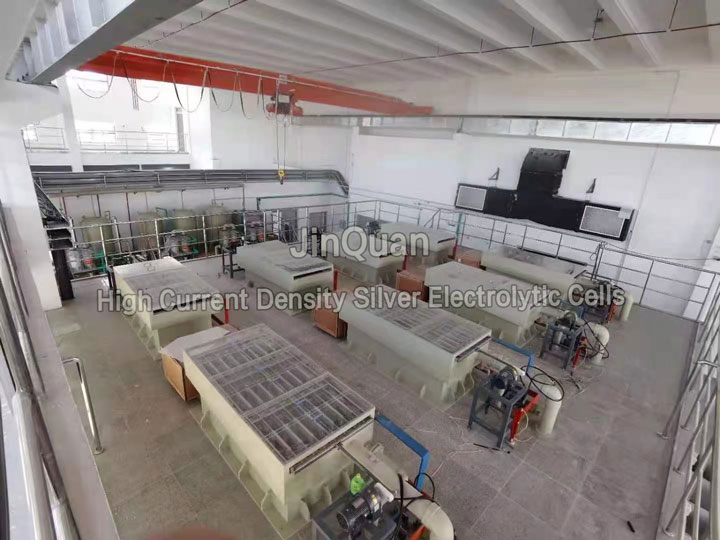 High Current Density Silver Electrolytic Cells
Characteristics of High Current Density Silver Electrolytic Cells:
Any type of cell must be based on stable silver powder deposition quality and reliable operation safety. Notable features of high current density electrolytic cells include:
A. High current density allows fewer cycles per unit weight of the anode, accelerating capital turnover for enterprises.
B. The electrolyte flows in a parallel manner, with liquid moving from bottom to top and uniformly distributed across the cell, facilitating ion diffusion.
C. A large volume of electrolyte is circulated, enhancing ion diffusion speed and reducing concentration polarization.
D. Secure connections between cathodes, anodes, and outlets using bolts ensure good conductivity.
E. The number of cells in series is minimized to optimize efficiency.
-
 the horizontal electrolytic cell for silver powder
Domestically, from the early Shenyang smelting plants to the large-scale copper and lead refining plants like Huayin Gold and Lead (with an annual white silver output exceeding 600 tons), practically all have adopted this cell configuration for white silver refining. Additionally, other facilities that use this type of cell include:
Australia's sole AGR Refining Plant and Johnson Matthey (Johnson Matthey) in the UK, among other major international precious metal refineries.