-
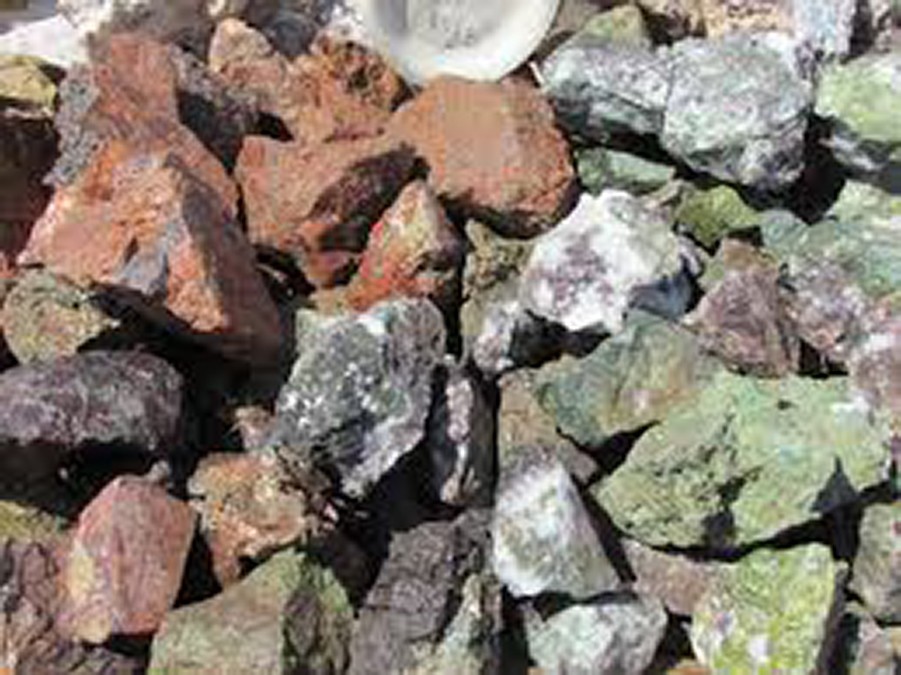 Recovering Copper from Copper Oxide Ores
This process is characterized by adopting a new leaching agent system of NH₃-NH₄F (or NH₃-NH₄HF₂) to replace the NH₃-(NH₄)₂CO₃ or NH₃-(NH₄)₂SO₄ system used in traditional ammonia leaching processes. The original process route of "high-temperature reduction roasting followed by atmospheric ammonia leaching" is thus simplified to direct atmospheric ammonia leaching. When coupled with solvent extraction and electrowinning, this method forms a new process flow for treating such ores.
This process has the advantages of short process flow, simple and convenient operation, low energy consumption, short leaching time and high copper leaching rate. It can be applied to the selective recovery of copper from copper oxide ores, and is particularly suitable for processing refractory copper oxide ores with high content of alkaline gangue.
-
 Carbon-Sulfur-Arsenic-Bearing Gold Ores
This method belongs to the technical field of the metallurgical industry.
First, fine grinding is conducted to break the inclusions in carbon-sulfur-arsenic-bearing gold ore and liberate the encapsulated gold, creating favorable conditions for subsequent gold leaching. Next, gold is concentrated through jet-pulsed flotation, which effectively reduces the volume of ore to be processed in follow-up procedures.
Subsequently, oxidation reactions are carried out to convert arsenic into arsenate, sulfur into sulfate, and passivate the carbonaceous matter, so that fine-grained gold particles are fully exposed. After that, precipitation reactions are performed to transform arsenic into stable scorodite, eliminating the risk of arsenic re-leaching; meanwhile, sulfate and carbonate are converted into calcium sulfate and calcium carbonate respectively. Calcium carbonate is then separated and removed, and caustic soda (sodium hydroxide) is regenerated for recycling.
A cyanide-free gold leaching agent is adopted to extract gold from the pretreated gold ore with carbon, sulfur and arsenic removed. This green and eco-friendly reagent contains no toxic cyanide, and is environmentally compatible.
The entire green gold leaching process operates under ambient temperature and pressure at a near-neutral condition (pH 6–8), making it suitable for wide promotion and application.
-
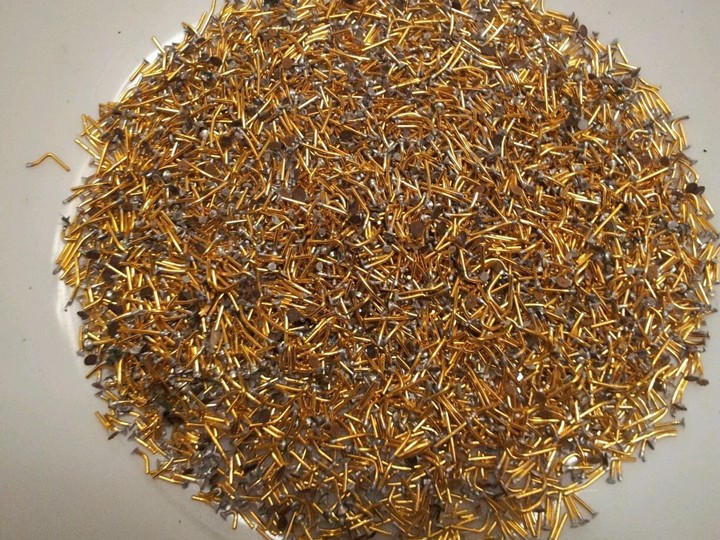 Recovering Multiple Rare and Precious Metals
This method follows a targeted process route: Sn is first leached and separated, followed by leaching of Cu from WPCBs. Next, Al, Ni and Zn are leached and recovered respectively, and the process concludes with the leaching and recovery of Au and Ag.
When recovering various rare and precious metals from WPCBs, this method enables sequential and orderly leaching of all target metals, realizing cascade recovery of rare and precious metals from WPCBs. As a key green recycling technology for waste resources, it supports the circular utilization of waste resources and mitigates environmental hazards from electronic wastes including WPCBs.
-
Indirect Gold Heap Leaching Process
The impurity removal process is carried out as follows: Activated carbon is added into the pregnant leach solution obtained from gold heap leaching. After 10 to 30 days of adsorption, the adsorption-saturated activated carbon is extracted for desorption, producing desorption wastewater and desorbed activated carbon. The desorbed activated carbon is then sent for acid pickling treatment. The acidic wastewater generated from acid pickling, the aforementioned desorption wastewater, and the smelting wastewater produced during gold slime smelting are all delivered to a sedimentation tank, where high-efficiency impurity remover is dosed for impurity removal treatment. The resulting precipitates are subjected to pressure filtration and then stored in the warehouse.
The applied high-efficiency impurity remover features high impurity removal efficiency, fast sedimentation rate, and strong removal capacity for impurities including copper, mercury, zinc and nickel. It also has a wide adaptable pH range and will not interfere with the gold leaching process. This process realizes long-term recycling and zero discharge of the leachate, maintains impurities in the leachate at a low concentration to improve the gold leaching rate, and enables the recovery of impurity metals.
-
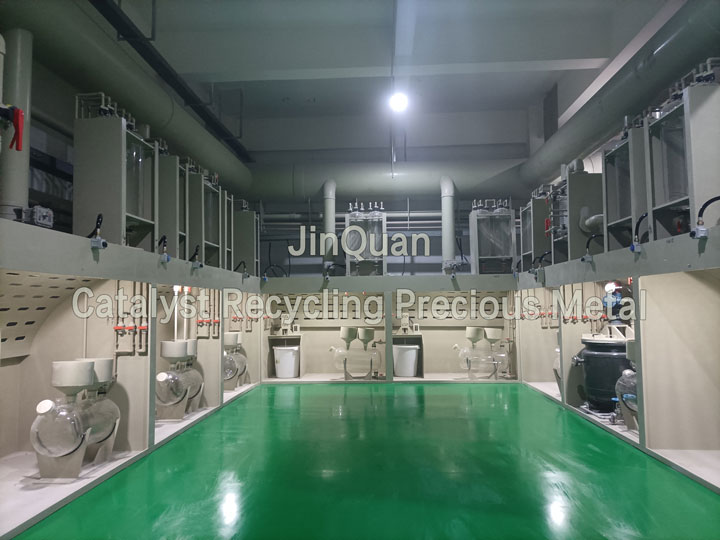 Recovering Precious Metals
The process for recovering precious metals from spent precious metal catalysts mainly consists of the following steps: pretreatment of the precious metal-bearing spent catalysts, leaching of precious metals into solution, and purification and recovery of precious metals from the solution.
The leaching solution used in this process contains sodium hypochlorite, hydrogen ions, sulfate ions and phosphate ions, which boasts the merits of low cost, low pollution, low hazard and easy industrial scalability. In addition, the mixed acid of sulfuric acid and phosphoric acid at an appropriate ratio also has outstanding properties including stable performance, non-volatility and strong capacity to dissolve precious metals.
Furthermore, staged roasting is adopted for the pretreatment of precious metal-bearing spent catalysts. This process can burn off the carbon deposits on the spent catalysts more completely, facilitating the recovery of precious metals in subsequent steps and improving the corresponding recovery rate.
-
Recovering Mixed Copper Ore
The method is characterized in that it comprises the following steps:
Grind the raw ore until the -0.075 mm particle fraction accounts for 60% to 80% of the total mass. Add 500-1200 g/t of sodium sulfide (Na₂S), 100-1000 g/t of sodium butyl xanthate, and 25-100 g/t of pine alcohol oil (dosages calculated based on the mass of raw ore) for flotation, to obtain copper concentrate and flotation tailings.
Subject the flotation tailings to magnetic separation at a magnetic field intensity of 0.35-1.30 T, to obtain magnetic concentrate and magnetic tailings.
Thicken and dewater the magnetic concentrate to a liquid-solid ratio of 2-3:1, add concentrated sulfuric acid to adjust the pH to 1, perform agitation leaching for 20 to 60 minutes, and carry out solid-liquid separation to obtain leachate and leaching residue. The leachate is treated via hydrometallurgical processes to obtain cathode copper.
The method of the present invention is a combined beneficiation-metallurgy process with a high comprehensive copper recovery rate. As a simple, efficient, economical, energy-saving and environment-friendly method for comprehensive copper recovery, it is applicable to mixed copper ores.
-
 Heap Leaching Process for Low-Grade Gold Ore
This process falls under the technical field of metallurgy, and is implemented in accordance with the following steps:
① Raw gold ore is first processed by open-circuit coarse crushing. All coarsely crushed products are fed into the intermediate crushing system and then classified by a vibrating screen. Coarse oversize materials are returned to the intermediate crushing equipment for further crushing, while qualified undersize materials meeting the particle size requirement are fed into the HPGR mill.
② After open-circuit fine crushing by the HPGR, the crushed products are treated through the combined action of a wet vibrating screen and classification equipment. The finer overflow products are delivered to the all-slime cyanidation leaching system, while the underflow sand and coarse-grained materials are mixed with an appropriate amount of pH-adjusting lime, then transported to the leaching yard for heap construction, so as to realize the classified leaching process for gold ore materials.
③ After the leaching process is completed, gold-bearing pregnant solution and tailings are obtained.
This process adopts HPGR open-circuit fine crushing. The crushed products feature finer particle size and abundant surface microcracks, which can significantly improve the gold leaching rate, reduce the consumption of leaching reagents, and shorten the heap leaching cycle. Meanwhile, the classified fine-grained products can be recovered synchronously during the heap leaching process.
-
 precious metal-bearing waste blue film sheets
Current pretreatment methods for precious metal-bearing waste blue film sheets include the roasting method and wet stripping method, with the latter further categorized into inorganic solvent stripping and organic solvent stripping.
The roasting method features a short treatment process, as alloy feedstock can be directly obtained after roasting. However, it comes with high investment costs, as it requires the procurement of incinerators and flue gas treatment facilities (a large volume of hazardous flue gas generated during roasting needs proper treatment), leading to elevated environmental protection costs.
The organic solvent-based wet stripping method has the edge in easy scaling and automated production. Nevertheless, it is plagued by defects including long process flow, high requirements for production equipment, large reagent consumption, severe health hazards to humans caused by highly volatile reagents, and intractable waste liquid disposal.
As for the inorganic solvent-based wet stripping method, it also has shortcomings such as long treatment process, low level of mechanization during operation, and relatively low treatment efficiency.
-
 New Metallurgical Processes
For easily treatable ores, the Carbon-in-Pulp (CIP) and Carbon-in-Leach (CIL) processes are now widely adopted. As mentioned above, these two new process flows represent important research achievements and progress in the chemical metallurgy industry. According to incomplete statistics, roughly 50% of the world's gold is currently produced via these processes, which fully demonstrates their high production efficiency and wide industrial adoption.
These processes are applicable to a broad range of feed materials, thus providing great flexibility for process selection. Coupled with their impressive metal recovery rates and low investment costs, it comes as no surprise that they rank among the most widely used metallurgical processes worldwide.
Overall, the CIP process has a significant economic advantage over the traditional cyanidation process. Its core differentiating advantage lies in its gold recovery mechanism: the zinc displacement process (a conventional downstream step of traditional cyanidation) recovers gold through reduction, where gold ions are reduced and deposited onto zinc powder. This process requires clear filtrate as a prerequisite, otherwise high-purity gold cannot be extracted at all.
The CIP process, by contrast, extracts gold directly from ore pulp, so the straightforward and convenient solid-liquid separation method can be applied directly. This approach not only simplifies operation, but also considerably cuts equipment and labor costs.