-
 New Metallurgical Processes for Gold and Silver Recovery
For readily treatable ores, the Carbon-in-Pulp Process is now the most commonly used method. According to incomplete statistics, approximately 50% of the world's gold is produced via this process, which fully reflects its high production efficiency and wide penetration in the industry.
This process is adaptable to a very wide range of feed materials, leaving great flexibility for production arrangement. Combined with its considerable metal recovery rate and low investment cost, it is no surprise that it has become one of the most widely applied metallurgical industrial processes in the world.
Overall, the CIP process has significant economic advantages over the traditional cyanidation process. Its core differentiated advantage lies in the mechanism of gold recovery: the zinc cementation process (a supporting process of traditional cyanidation) recovers gold by reducing gold ions and depositing them onto zinc powder, which requires the production of completely clear filtrate, otherwise high-purity gold cannot be extracted at all.
The CIP process, by contrast, extracts gold directly from the pulp, so it can directly apply the straightforward and convenient solid-liquid separation procedure. This approach is not only simpler to operate, but also saves considerable costs on equipment and labor.
As mentioned in the previous operation steps of the cyanidation process, retaining the slurry in the conical tank for a certain period of time helps improve metal leaching efficiency, and the same rule applies to the adsorption tanks of the CIP process. However, compared with the traditional process, the CIP process is less susceptible to impurities in the leachate, eliminating the need for precise control of parameters such as cyanide concentration and dissolved oxygen concentration. The traditional process, by comparison, can only achieve a high metal leaching rate by relying on the stability of cyanide ions in alkaline solution and increasing the dissolved oxygen concentration in the solution.
These pain points are all resolved in the CIP process, which not only simplifies the operation procedure, but also reduces the workload of on-site operators.
-
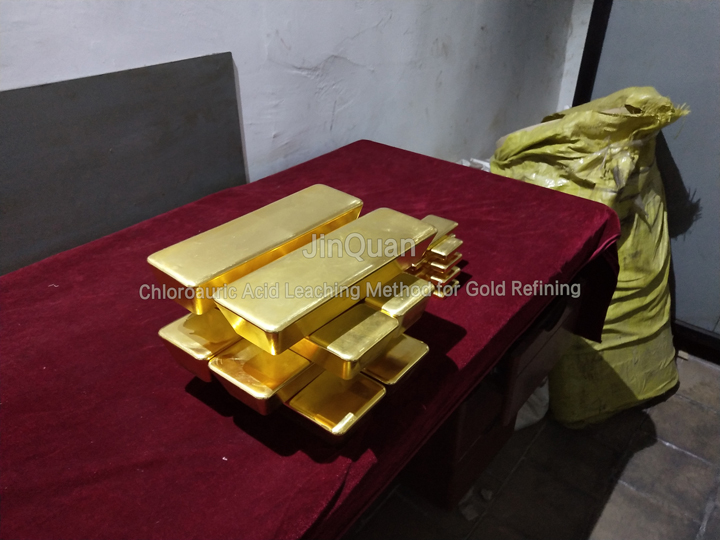 Recovering Gold and Silver from Refractory Gold Ores
a method for recovering gold and silver from refractory gold ores, which falls into the field of metallurgy. It consists of two parts:
First, destroying the inclusions encapsulating gold and silver through hot pressure pre-oxidation, oxidizing organic carbon in the ore, and recovering sulfur contained in the ore;
Second, recovering gold and silver from the pre-leach residue via cyanidation or other cyanide-free leaching processes.
Recovery gold and silver from refractory gold ores, the total recovery rate of gold and silver exceeds 90%, which is 40 percentage points higher than that of the conventional cyanidation process, and the sulfur recovery rate is above 50% at the same time. The production cost of this process is approximately RMB 400 per ton of ore. Compared with bio-oxidation, two-stage roasting and conventional hot pressure oxidation processes, can reduce investment and production cost, improve recovery efficiency, realize comprehensive recovery of multiple elements, and lower environmental pollution, with remarkable economic and social benefits.
-
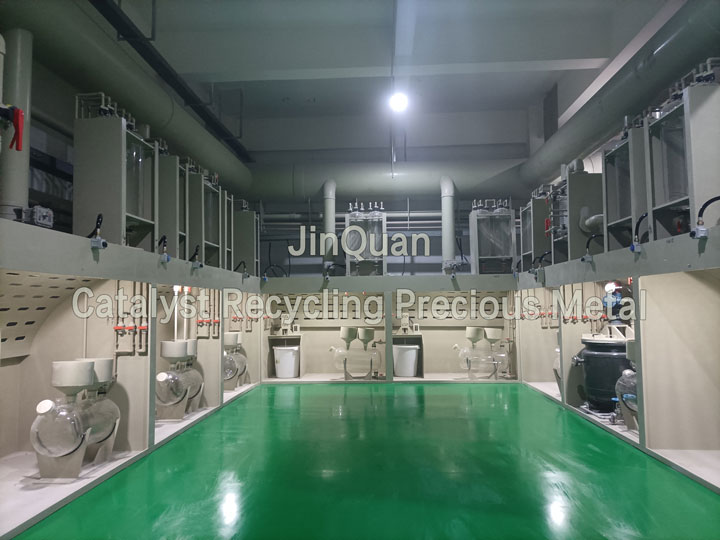 Waste Blue Adhesive Film Sheets
At present, pretreatment methods for precious metal-bearing waste blue adhesive film sheets include the roasting process and wet stripping processes (using inorganic solvents and organic solvents respectively).
The roasting process has the advantage of a short treatment flow, as alloy feedstocks can be obtained directly after roasting. However, it has drawbacks of high investment cost: it requires the procurement of incinerators and flue gas treatment devices (as a large amount of harmful flue gas generated during roasting needs to be treated), leading to high environmental protection costs.
For the organic solvent-based wet stripping process, its merit is that it is easy to realize large-scale and automated production. Nevertheless, this method has defects such as long process flow, high requirements for production equipment, large reagent consumption, great harm to human health caused by the high volatility of reagents, and difficult waste liquid disposal.
As for the inorganic solvent-based wet stripping process, it also has problems including long treatment flow, low mechanization degree during the treatment process and relatively low efficiency.
-
 Precious Metal Recovery Electric Arc Furnace
The precious metal recovery electric arc furnace is a metal smelting furnace adopting DC (direct current) electric arc furnace technology, designed for the recovery and enrichment of precious metals from deactivated precious metal catalysts with silica-alumina carriers, precious metal-bearing tailings and smelting slag.
An openable curved exhaust hood is installed at the top of the furnace body. The hood consists of two symmetric left and right halves, which can be rotated towards each other to splice and form a hermetic seal. A screw conveyor is arranged above the furnace body, with its discharge port directly aligned with the furnace top. An exhaust duct is set above the opening-closing joint of the two halves of the curved exhaust hood, and the duct is connected in sequence to a dry quench tower, a bag dust collector, an induced draft fan and an exhaust stack.
Through material pretreatment and batching, the process improves the metal capture rate and the quality of the silicate glass phase in the furnace slag, making the slag meet the raw material standards for Portland cement and slag wool. It realizes the comprehensive recovery of both precious metals and catalyst carriers, and achieves the compliant disposal of hazardous solid waste.
-
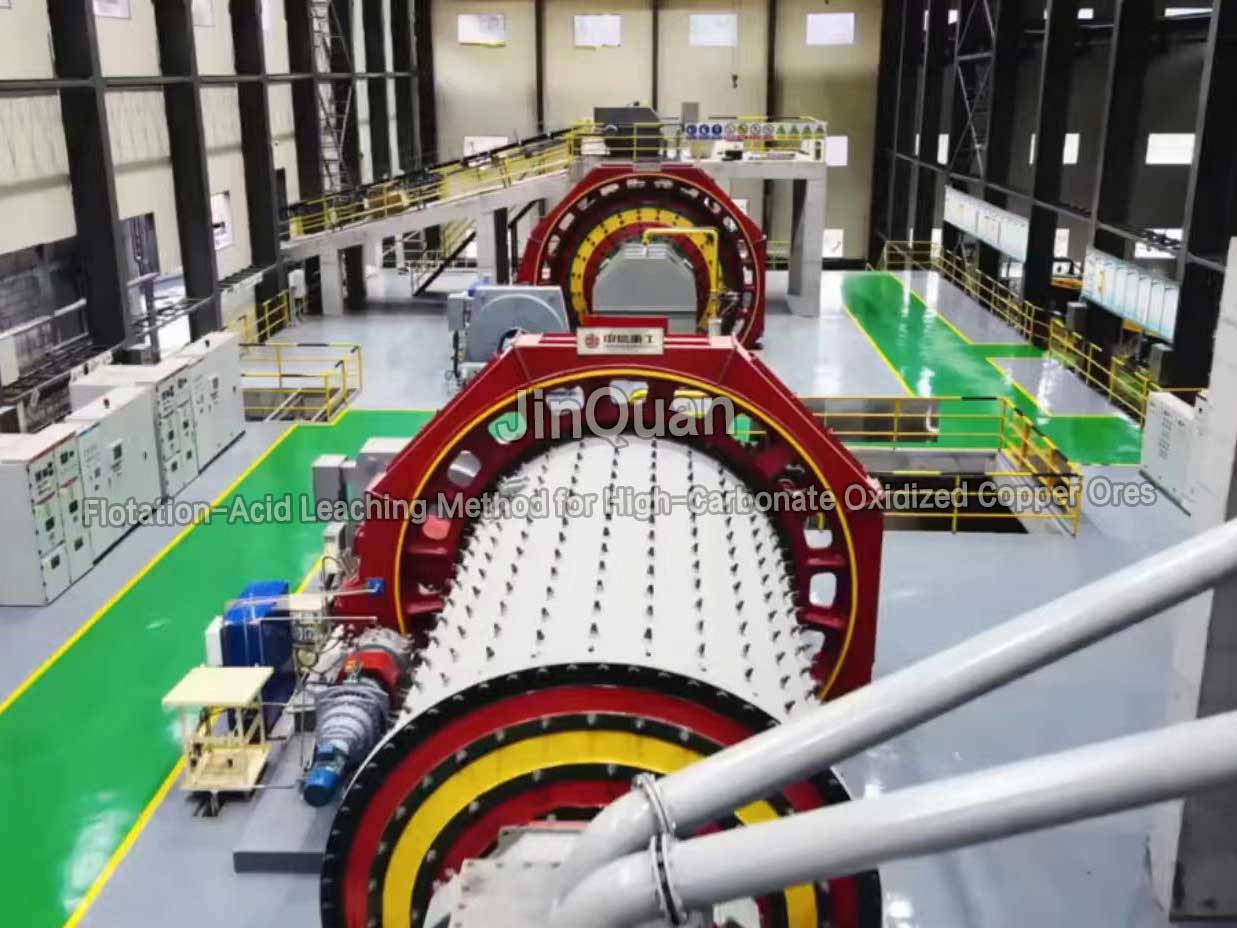 The high-sulfur cobalt-copper ore treatment process
The high-sulfur cobalt-copper ore treatment process featuring low cost and high leaching efficiency mainly consists of the following unit operations: fluidized bed roasting, low-acid leaching, flotation, high-acid leaching, high-copper solvent extraction and low-copper solvent extraction.
After fluidized bed roasting of high-sulfur cobalt-copper ore, the sulfation rates of both cobalt and copper exceed 85%, the leaching efficiencies of cobalt and copper are both higher than 98%, and the grades of cobalt and copper in the leaching residue are lower than 0.15% and 0.30% respectively.
The roasting process is autothermal and requires no supplementary external energy, thus lowering energy cost. In addition, the steam generated during fluidized bed roasting can be used for heating in the hydrometallurgical leaching process.
For the sections of roasting, leaching and flotation, no other auxiliary materials are required except a small dosage of flotation reagents, leading to low auxiliary material cost. Meanwhile, no harmful elements such as chlorine will be introduced in the process, which avoids equipment corrosion and degradation of copper extractants.
-
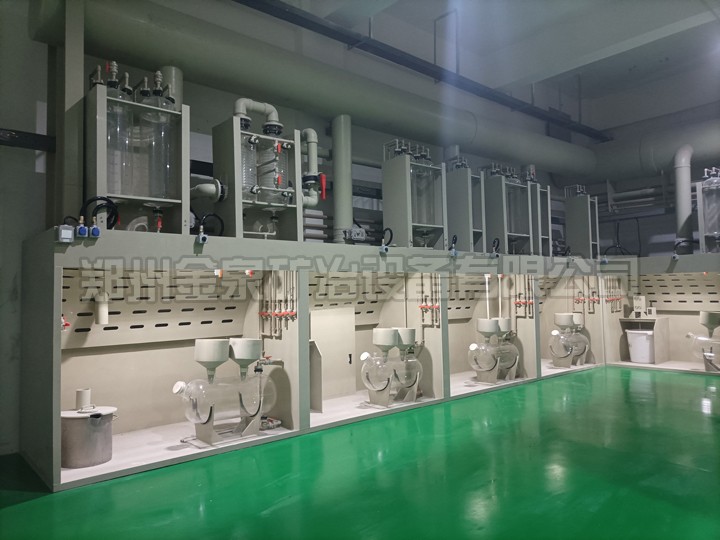 Extracting Precious Metal Elements
The method comprises the following steps: mix the precious metal-bearing material with a mixed solution of aluminum nitrate nonahydrate and metal chloride, then obtain the liquid phase containing precious metal elements through standing and separation.
Leveraging the strong acidity and oxidizing property of the high-concentration solution of aluminum nitrate nonahydrate and chloride salts, this process can efficiently dissolve precious metal elements from secondary precious metal resources. It does not involve any volatile inorganic acids or organic solvents, thus achieving the effects of simplified process flow, reduced operational hazards and lower wastewater discharge. It boasts a high dissolution rate for precious metal elements, and can realize complete dissolution of palladium and gold within a short period of time. Compared with traditional methods such as aqua regia leaching, it has the advantages of convenient transportation, safe application, zero emission of volatile gases, etc.
-
 Recovering Copper from Mixed Copper Ores
Method for Recovering Copper from Mixed Copper Ores,This method is characterized by the following steps:
1、Grind the raw ore until the proportion of particles with size less than 0.075 mm (the minus 0.075 mm fraction) accounts for 60%~80%. Calculated based on the mass of the raw ore, add 500~1200 g/t of sodium sulfide (Na₂S), 100~1000 g/t of sodium butyl xanthate, and 25~100 g/t of pine oil sequentially, then carry out flotation to obtain copper concentrate and flotation tailings.
2、Subject the flotation tailings to magnetic separation under a magnetic field intensity of 0.35~1.30 T to obtain magnetic concentrate and magnetic tailings.
3、Concentrate and dewater the magnetic concentrate until its liquid-solid ratio reaches 2~3:1. Add concentrated sulfuric acid to adjust the pH to 1, perform agitated leaching for 20~60 minutes, then conduct solid-liquid separation to obtain leachate and leaching residue. The leachate is treated via hydrometallurgical processes to produce cathode copper.
This combined mineral processing-hydrometallurgy process achieves a high comprehensive copper recovery rate. It is a simple, efficient, cost-effective, energy-saving and eco-friendly approach for comprehensive copper recovery, and is applicable to the treatment of mixed copper ores.
-
 Enrichment And Recovery Of Precious Metals
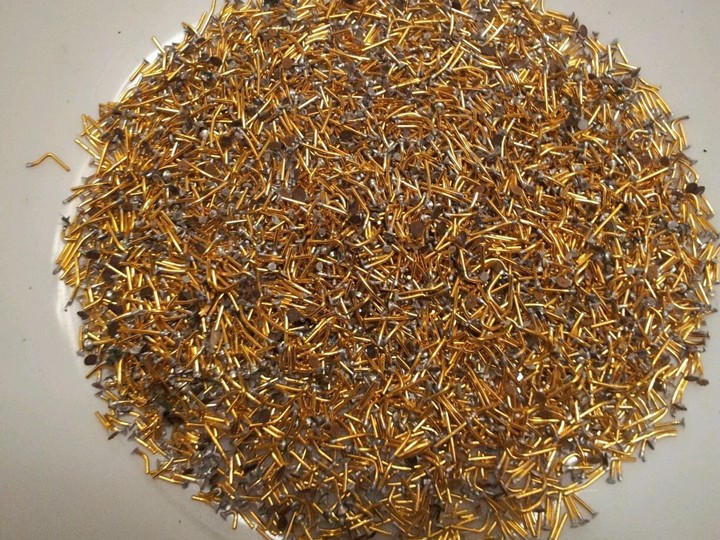
A process for the selective leaching, enrichment and recovery of precious metals from waste precious metal plated materials is provided. This process adopts a leaching reagent consisting of a precious metal chelating agent, a metal complexing agent, an oxidant, a pH regulator and an accelerator to selectively leach the precious metal coatings from the feedstock. The leached precious metals are then enriched and recovered via electrowinning, while the post-electrowinning solution is recycled for formulating the leaching reagent.
The process improves the production efficiency and actual recovery rate of precious metals, and features mild reaction conditions and low environmental pollution throughout the whole operation.
Also provided is a leaching reagent for the selective leaching, enrichment and recovery of precious metals from waste precious metal plated materials.
-
 Leaching and Recovering Copper, Silver, Gold
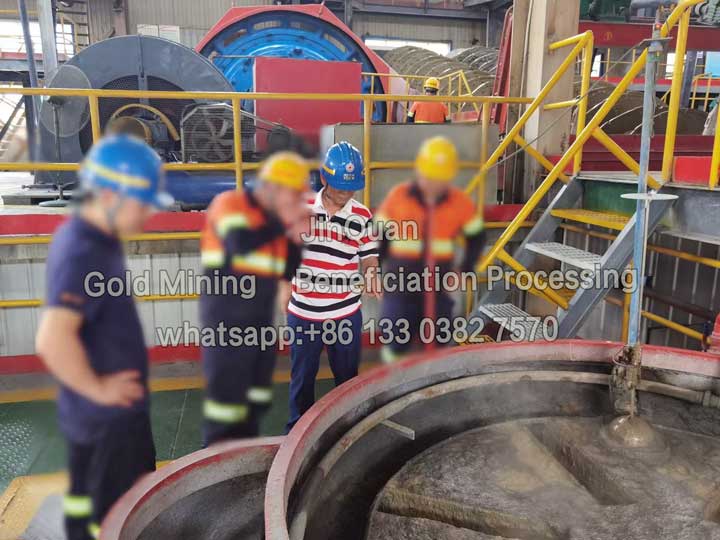
This description covers a method and supporting equipment for leaching and recovering copper, silver, gold, lead, iron and sulfur from complex copper sulfide ore, with hydrochloric acid, oxygen and sodium hydroxide as leaching agents. With a small dosage of oxidant as the process promoter, multiple target elements are recovered from the leachate, while elemental sulfur, gold and sodium thiosulfate are recovered from leaching residues, and all leaching solutions can be regenerated for recycling. A separated calabash-shaped electrolytic cell is adopted as the electrolysis equipment to recover copper.
This method improves the efficiency of low-cost, non-toxic gold extraction with intensified process performance. All reagents used are non-toxic and low-cost, which reduces gold loss during treatment and realizes high-efficiency recovery of multiple elements. The whole process is pollution-free and does not generate any toxic or hazardous waste.