-
 electrolytic gold recovery and separation process
Electrolytic method for separating gold and silver:
Suitable for alloys with silver content above 75%, gold content between 0% to 25%, and other impurities minimal, this electrolytic separation method yields over 99.95% pure silver powder, while gold is collected into the anode bag, effectively achieving the separation of gold and silver.
-
 common methods for separating gold and silver
Common Methods for Separating Gold and Silver:
Chemical dissolution method: Gold can be dissolved in hydrochloric acid, while silver reacts with Cl⁻ ions to form a silver chloride precipitate during the dissolution process. After filtering, gold and silver are separated.
Aqua-regia solution method: Suitable for alloys with low silver content (silver typically below 10%), this method allows both gold and silver to dissolve. However, after dissolving, silver reacts with Cl⁻ ions to form a silverCommon Methods for Separating Gold and Silver chloride precipitate, enabling it to be separated from gold.
-
 chemical separation of gold and silver
Chemical separation of gold and silver:
Using a single acid, it cannot dissolve gold but can dissolve silver, achieving the separation of gold and silver. Hydrochloric acid or sulfuric acid is commonly used. This method is typically used for gold-silver alloys with a gold content below 30%, while silver, copper, iron, and zinc can be dissolved in hydrochloric acid or sulfuric acid, whereas gold cannot. After filtering and washing, it can obtain gold with over 98% purity. For lead-containing alloys, hydrochloric acid is used for dissolution
-
 extraction of gold from alloy gold
Alloy gold: Alloy gold produced by roasting mercury paste on a mercury plate, alloy gold produced by melting gold paste in a converter, alloy gold produced by melting gold paste after removing impurities with nitric acid, alloy gold obtained by pyrometallurgical or hydrometallurgical treatment of copper lead anode paste, and other alloy gold produced in other gold and silver mines and rare and precious plants for non-ferrous metallurgy.
The gold content is 40%~99.9%, and the silver content is 40%~99.9%.
-
 extraction of gold from gold mud
Extraction of Gold From Gold Mud:
Gold mud and heavy sand: about 3% of heavy sand selected from equipment such as zinc powder replacement gold mud, gold loaded carbon analytical electrolysis gold mud, gold loaded carbon incineration ash, Nielsen or shaker.
Gold content 5%~40%, silver content 5%~40
-
 heating displacement method is used to recover gold
Copper wire (or copper chips) heating displacement method is used to recover gold:
Cyanide-containing solutions generally employ the copper wire (or copper chips) heating displacement method to recover gold. Additionally, for high-gold content plating waste solution, electrolytic methods can be employed to recover gold.
For low-gold content solutions and rinse water, activated carbon adsorption and ion exchange adsorption methods are used to recover gold.
-
 recovering gold from gold-containing waste liquids
Methods for Recovering Gold from Gold-Containing Waste Liquids:
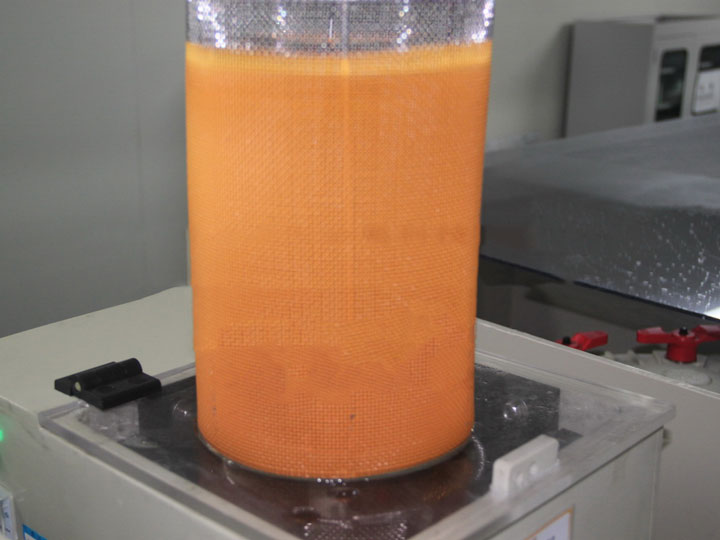
Gold-containing waste liquids include electroplating waste liquids, which mainly consist of cyanide plating waste solutions and sulfuric acid gold plating solutions, as well as nitric acid waste solutions, chloride waste solutions, and various gold-containing wash waters. Electroplating waste solutions typically contain higher levels of gold, with acidic gold plating waste solutions commonly having 4~12 g/L of gold and alkaline gold plating waste solutions reaching up to 20 g/L.
-
 etching solution leaching
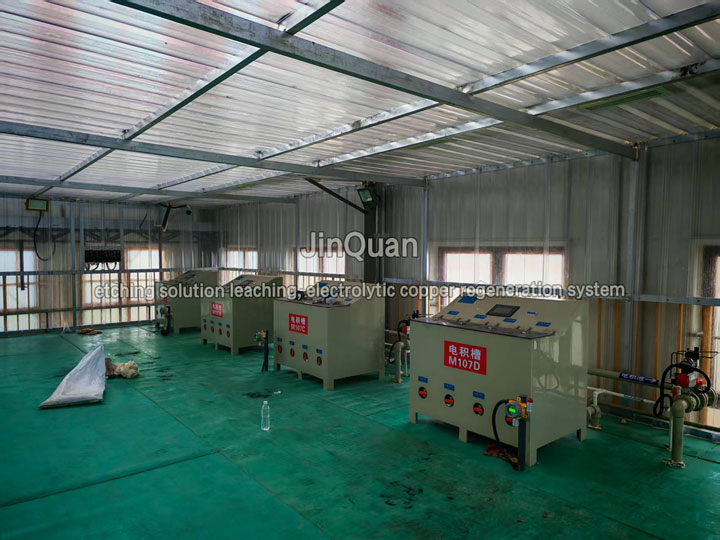
Etching Solution Leaching, Electrolytic Copper Regeneration System:
The copper leaching process generates a large amount of leaching waste, which contains copper ions (100-170 g/L), ammonia, and sodium chloride. Traditional handling methods involve selling the waste as is by PCB manufacturers, who use it as raw material to produce foam copper and other products via precipitation. However, this method fails to effectively utilize the excess ammonium ions and small amounts of copper ions, leading to resource wastage.
Our Innovative Process:We have adopted a solvent leaching - reverse leaching - electroplating process for the regeneration of leaching waste. This approach uses leaching to separate copper ions from the leaching waste without causing damage, achieving a clean separation. The leach solution is then separated into its components through fractionation. Once the leaching performance is restored, the entire solution is returned to the copper production line for reuse. Finally, we utilize electroplating technology to process the reverse-leached electrolyte, producing copper plates with over 99.5% purity.
-
 colloid palladium adsorption recovery method
Colloid Palladium Adsorption Recovery Method:
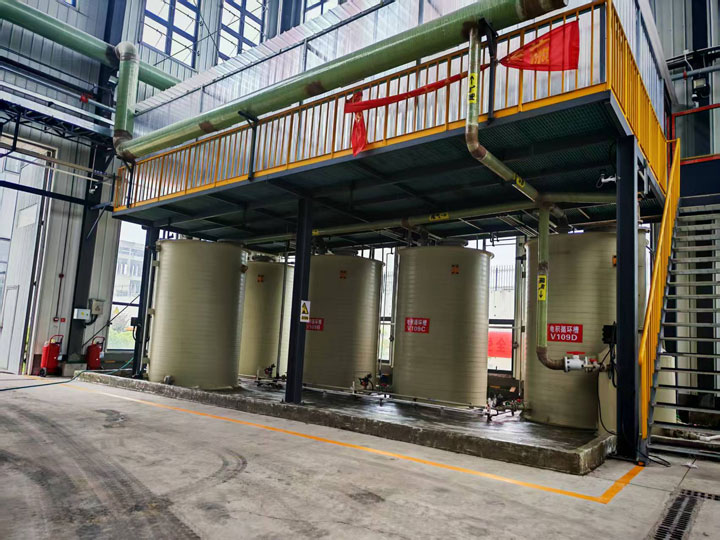
Acidic colloid palladium is generated in the early activation treatment solution within the hole of the circuit board. Its composition consists of a sodium chloride bath and weak acid stabilization, as it has Sn encapsulation.
Reasons for Encapsulation with Tin:Due to the tin encapsulation, it's necessary to break through this layer to enable adsorption of palladium. Conventional resins or activated carbons are ineffective in this process, as they cannot easily penetrate or effectively adsorb palladium.
Our Custom-Built Activated Carbon:
To address this challenge, we have specifically developed and produced activated carbon optimized for the adsorption of acidic colloid palladium. This activated carbon achieves efficient recovery of colloid palladium, with an adsorption capacity ranging from 5 to 20 grams per liter.