-
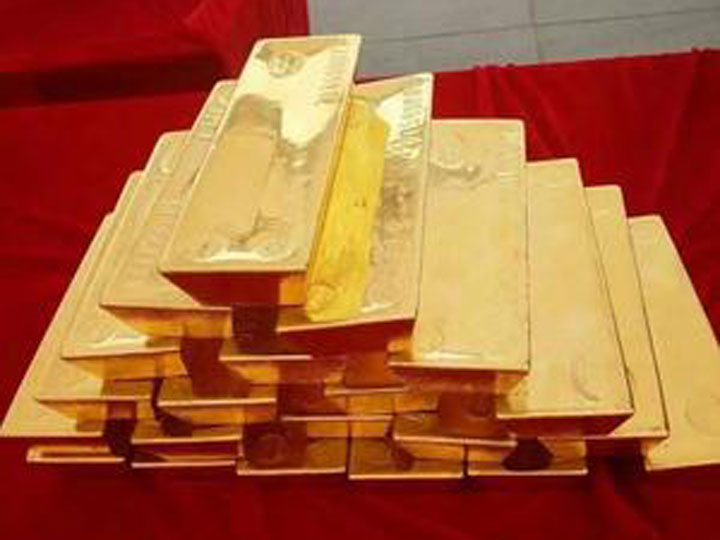 What are the chemical refining methods for gold
Answer: The chemical refining of gold mainly adopts processes including concentrated sulfuric acid boiling leaching, nitric acid silver parting, aqua regia gold parting, chlorination gold parting, and reduction with oxalic acid or sodium sulfite.
1、The concentrated sulfuric acid boiling leaching method uses concentrated sulfuric acid for long-term leaching and boiling at high temperatures. It converts base metals such as silver and copper in the alloy into sulfates for removal, so as to achieve the purpose of gold purification.
2、The nitric acid silver parting method features a fast reaction rate and high saturation concentration of silver in the solution. It is generally carried out under autothermal conditions (no heating is required, or heating can be applied at the later stage to accelerate dissolution), so it is widely used in industrial production.
3、The aqua regia gold parting method is suitable for refining crude gold with a silver content of less than 8%. During the process, gold dissolves into the solution, while silver forms silver chloride (AgCl) precipitate and is separated out. The platinum group metals (PGMs) contained in the solution are subsequently separated and recovered.
4、The feedstock for oxalic acid reduction refining is usually crude gold or crude gold powder obtained from the enrichment stage, and a gold grade of around 80% is sufficient. First, the crude gold powder is dissolved to transfer gold into the solution. After adjusting the acidity of the solution, oxalic acid is used as the reducing agent to reduce gold ions into pure sponge gold. Following acid pickling treatment, the sponge gold can be cast into gold ingots with a gold grade of over 99.9%.
-
 Precious Metal Mixed Solution
The method for separating rhodium and ruthenium from a precious metal mixed solution includes the following steps:
Add deionized water to the precious metal mixed solution to adjust the rhodium concentration in the system, then add dilute hydrochloric acid to adjust the pH of the mixed solution to 2.1~2.3.
Slowly heat the precious metal mixed solution to 125℃~130℃, then slowly add triethylenetetramine (TETA) solution under continuous stirring. Rhodium ions in the mixed solution react with triethylenetetramine to form rhodium salt precipitates. After cooling, filter the mixture to obtain filter residue and filtrate, with the filtrate reserved for subsequent use. Wash the filter residue until the washing effluent is colorless, then place the filter residue in a quartz boat and feed it into a muffle furnace.
This method can effectively solve the drawbacks of existing rhodium and ruthenium recovery processes: conventional recovery mostly adopts the melting method, which has complex procedures, can only recover target metals from solid waste, and cannot be applied to precious metal mixed solutions.
-
High-Efficiency Recovery of Platinum Group Precious Metals
Method for High-Efficiency Recovery of Platinum Group Precious Metals from Platinum-Containing Organic Alcohol Waste Liquor
To solve the defects of existing methods such as complex process, low platinum recovery rate, high energy consumption, environmental unfriendliness, poor product purity and potential safety hazards:
The method comprises the following steps: filter the platinum-containing organic alcohol waste liquor, remove filter residues to obtain a clear filtrate, and adjust the pH of the filtrate to 1.0-2.0 with acid or alkali liquor;
Under continuous stirring, add excess weak reducing agent into the pretreated platinum-containing organic alcohol waste liquor for reaction. The weak reducing agent refers to a reducing reagent whose reduction potential under the acidic condition of pH=1.0-2.0 can reduce metals with metal activity equal to or lower than platinum, but is not sufficient to reduce metals with potential higher than H⁺ potential;
Filter the reacted solution to obtain filter residues and tail liquor. The filter residues are washed and roasted to obtain powdery platinum group precious metals. The recovery process has the advantages of simple operation, short flow, high recovery rate, high product purity and low cost, and is of great industrial application value.
-
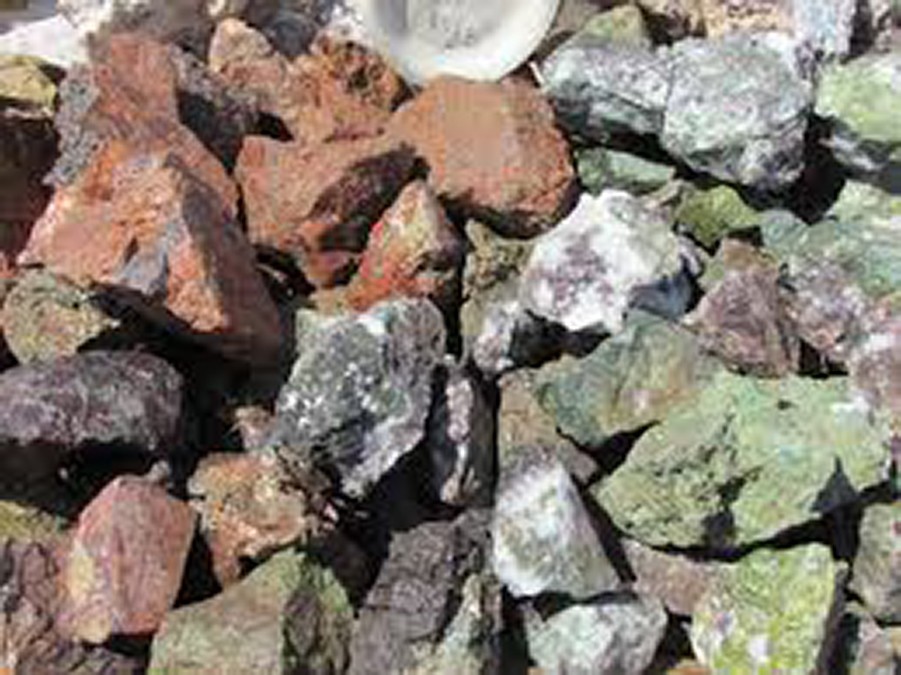 Improving the Copper Leaching Rate
Method for Improving the Copper Leaching Rate from Cuprite-Type Copper Oxide Ore by Adding Chlorine Dioxide:
Add an appropriate amount of cuprite ore into a three-neck round-bottom flask and pre-stir for a preset period of time. Add a specified mass of chlorine dioxide into the flask, then stir at room temperature to oxidize the cuprite, so that the cuprous oxide contained in the cuprite is converted into cupric oxide. After that, add sulfuric acid and carry out the leaching test with heating provided by a water bath. Copper is finally recovered from the leachate through filtration, solvent extraction and electrowinning.
Direct leaching of cuprite-type copper oxide ore has the drawbacks of long reaction time and high reaction temperature, while the addition of chlorine dioxide effectively improves the leaching efficiency of cuprite-type copper oxide ore in sulfuric acid. Chlorine dioxide is harmless to humans and animals and does not cause secondary pollution to the environment, so no hazardous components will remain in the leachate after the leaching process. Meanwhile, the application of chlorine dioxide in the oxidative leaching of cuprite-type copper oxide ore provides a new direction for the leaching of other minerals.
-
 Precious Metal Recovery Technologies for E-waste
The development of precious metal recovery technologies for e-waste (Waste Electrical and Electronic Equipment) is showing a trend of green, systematic and refined advancement. Going forward, it is necessary to further strengthen multi-technology coupling and full life cycle assessment (LCA), so as to achieve the synergistic development of resource recovery and environmental protection.
Despite the strengths of simple process flow and high recovery rate in e-waste precious metal recovery, pyrometallurgical technology still faces bottlenecks such as high energy consumption and environmental pollution. Cutting-edge processes represented by hydrogen-based smelting systems need to be developed to facilitate its green transition.
Biometallurgical technology has great potential in the precious metal recovery field thanks to its advantages of environmental friendliness and low cost. Although it currently has shortcomings including long leaching cycles and low leaching efficiency, its recovery rate and treatment efficiency have been significantly improved through optimization approaches such as strain engineering and nano-enhancement technologies.
Hydrometallurgical technology currently dominates e-waste precious metal recovery due to its low cost and easy operation. However, it is confronted with the challenge of highly toxic substance management and regulation. Future efforts should focus on the development of novel coordinating agents, to push the technical system to evolve in a high-efficiency, green and cost-effective direction.
Emerging technologies, including nanomaterials, biomass-derived materials and genetically engineered microorganisms, have demonstrated broad application prospects in e-waste precious metal recovery, and are expected to lead the in-depth transformation of recovery technologies towards precision, low-carbon and circular operation models.
-
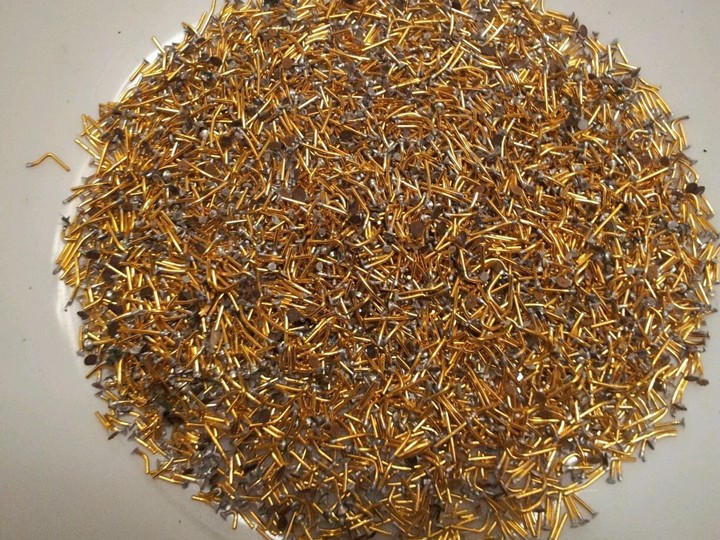 Recovering Gold From Gold-plated Scrap
What are the methods for recovering gold from gold-plated scrap components?
A: Gold on gold-plated scrap can be stripped via pyrometallurgical, chemical or electrolytic processes. The specific methods are as follows:
(1) Lead Melting Stripping Method
First, melt electrolytic lead, then immerse the gold-plated scrap in the molten lead to dissolve the gold layer into the lead. Remove the scrap after gold stripping is completed. The gold-bearing molten lead is cast into lead bullion plates, which are then subjected to electrolysis to produce electrolytic lead, and gold is recovered from the anode slime generated during the lead electrolysis process.
(2) Thermal Expansion Stripping Method
Based on the difference in thermal expansion coefficients between gold and the base alloy, this method creates gaps between the gold layer and the base material through heating. The treated parts are then boiled in dilute sulfuric acid to make the gold layer peel off, followed by subsequent dissolution and purification to recover gold.
(3) Sodium Cyanide-Sodium m-Nitrobenzenesulfonate Stripping Method
Weigh sodium cyanide and sodium m-nitrobenzenesulfonate at a specified ratio, add them to a fixed volume of water, and the stripping solution is ready for use after the reagents are fully dissolved. Immerse the gold-plated scrap in the stripping solution preheated to 90°C, and gold will dissolve into the solution within 1 to 2 minutes. Rinse the stripped scrap thoroughly with distilled water, and the rinse water can be reused for subsequent rinsing. Adjust the pH of the diluted gold-bearing stripping solution to 1~2 with hydrochloric acid. Then recover gold from the stripping solution via cementation using zinc plates or zinc wires until the yellow tint of the solution fades completely.
(4) Iodine-Potassium Iodide Solution Stripping Method
Wash and dry the parts to be stripped, place them in a porous plastic basket, and immerse the entire basket in the stripping solution until stripping is fully completed. The filtrate is concentrated, and gold powder can be obtained via reduction with sodium sulfite.
(5) Reverse Aqua Regia Stripping Method
The stripping solution is prepared with nitric acid (HNO₃) and hydrochloric acid (HCl) at a volume ratio of 3:1. Stripping is carried out at room temperature and can be completed within 1 to 5 minutes. First separate the silver chloride (AgCl) precipitate from the gold-bearing stripping solution, then concentrate the solution to drive off residual nitrate. Gold powder can be prepared by reducing the treated solution with sodium sulfite or ferrous salts.
(6) Electrolytic Stripping Method
An aqueous solution containing 2.5% thiourea and 2.5% sodium sulfite is used as the electrolyte, with graphite as the cathode and the gold-plated scrap as the anode. Under a current density of 2 A/dm² and a cell voltage of 4.1 V, gold can be completely dissolved within 20 to 25 minutes. The formed complex cation Au[SC(NH₂)₂]²⁺ is immediately reduced to gold powder by the sodium sulfite in the electrolyte.
-
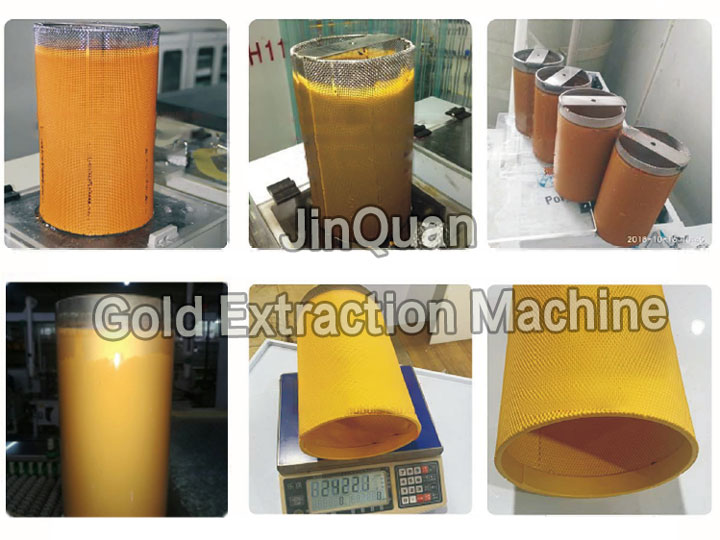 Recovering Gold from Gold-Containing Waste Liquids
Gold-containing waste liquids mainly include electroplating waste liquids (primarily cyanide waste plating liquids and waste ammonium gold sulfite plating liquids), aqua regia etching waste liquids, chlorination waste liquids, and various types of gold-bearing washing water.
Electroplating waste liquids have a relatively high gold content: generally, acid gold plating waste liquids contain 4-12 g/L of gold, while alkaline gold plating waste liquids can have a gold content as high as 20 g/L.
Common methods for recovering gold from these waste liquids include:
Recovering gold from cyanide gold-containing waste liquids by zinc (aluminum) displacement (using zinc wire or zinc powder);
Recovering gold from waste ammonium gold sulfite plating liquids by pH adjustment;
Gold recovery from aqua regia corrosion waste liquids;
Recovering gold by heated displacement with copper wire (or copper scraps).
-
 The highly efficient dissolution of precious metals
The highly efficient dissolution of precious metals from electronic waste (e-waste) relies on the following core mechanism: the chloroaluminate anion ([Cl₃]⁻) in the ionic liquid, acting as both a strong ligand and a Lewis acid, can form stable complexes with precious metals (e.g., Pd, Pt, Au, Rh), thereby disrupting the crystal lattice structure of the metals and enabling their high-efficiency dissolution at ambient or relatively low temperatures.
As a class of tailorable "green solvents", ionic liquids have unique advantages in the field of precious metal recovery, including low volatility, high stability, and the potential to realize selective dissolution of metals through structural tuning.
However, this technical route also clearly points to key challenges that must be addressed for its industrial application: the high synthesis cost of functionalized ionic liquids, the need to further optimize their selective dissolution capacity for specific metals, and the lack of a cost-effective method to separate and regenerate both the precious metals and the solvent itself from the complex ionic liquid system after dissolution.
-
Improving the Flotation Efficiency of Gold
Approaches to Improving the Flotation Efficiency of Gold from Copper Oxide Ore and Relevant Economic Benefits:Copper oxide ore is one of the critical ore types for gold extraction. However, the flotation process for recovering gold from copper oxide ore is confronted with numerous challenges. The reasons for the high difficulty of gold flotation from copper oxide ore are discussed as follows:
First, gold in copper oxide ore is often paragenetically associated with a variety of minerals that have significant differences in properties, making it difficult to achieve effective separation during flotation. The separation difficulty is further amplified especially when gold occurs as micro-fine particles or inclusions.
Second, gangue minerals in copper oxide ore, such as siliceous, calcareous and ferruginous minerals, also exert adverse impacts on gold flotation. The presence of these gangue minerals impairs the selectivity of flotation reagents, making it hard to realize precise collection of gold.
Third, traditional flotation reagents usually deliver unsatisfactory performance when applied to gold flotation from copper oxide ore.